1.
Just before noon, I hopped on the yellow-and-blue double-decker train, gliding slowly toward Amsterdam Centraal. In the seat beside me sat the familiar red hiking pack — clothes, documents, everything else — all the essentials for a month of travel ahead. I had rehearsed the meeting scene a hundred times in my head: maybe at the station entrance, a handshake, hello, I’m Patrick, nice to meet you.
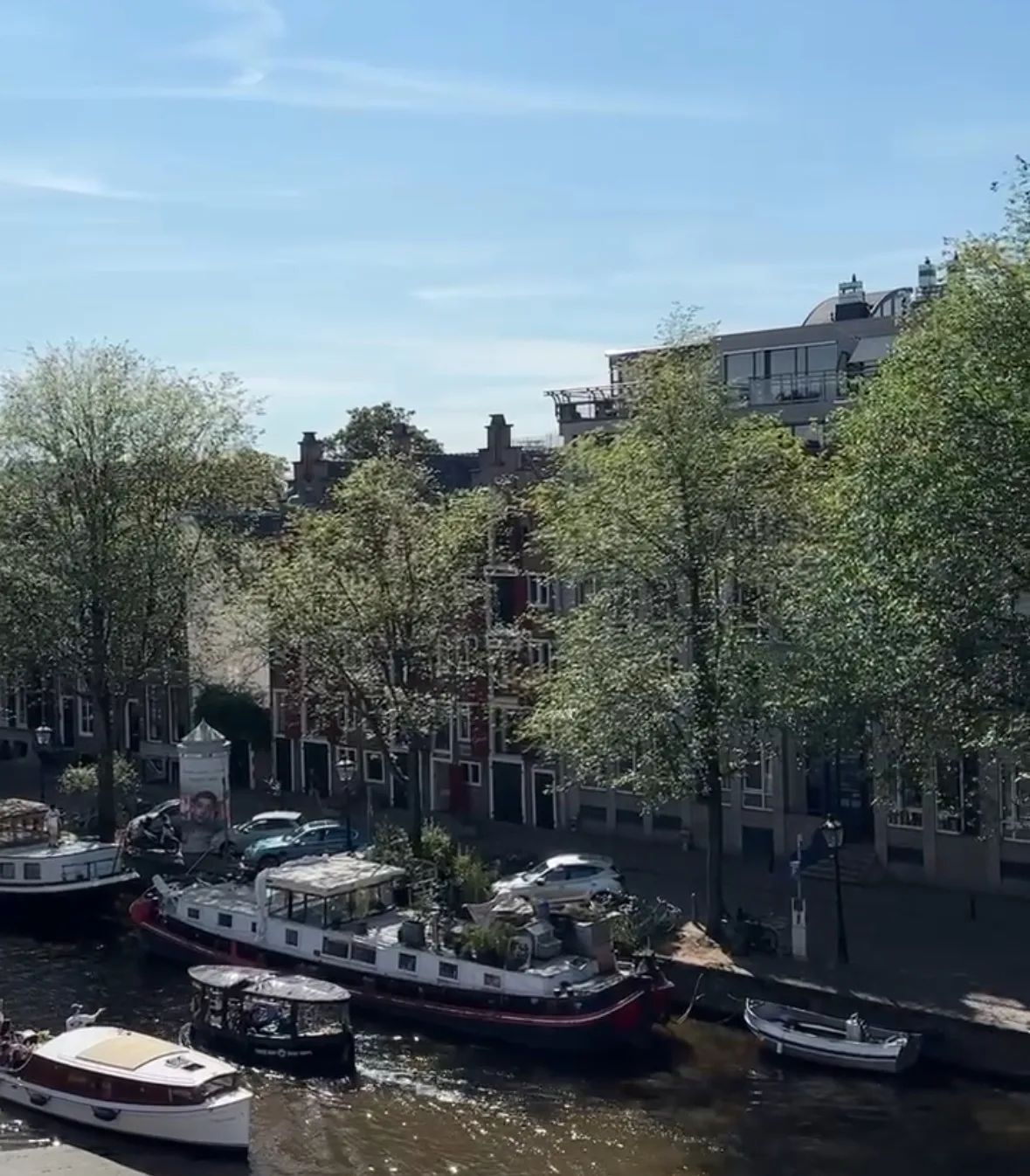
A canal runs along the back of Amsterdam Centraal. Five minutes, ten — I scrolled through old messages to confirm: this should be where we meet. I made a phone call, got an address, followed the map to a low old building beside a canal: sloped roof, wide windows, the kind of scene you’d find on a postcard. Doorbell, heavy door, spiral staircase — the floorboards groaned under my feet. I tried to work out whether the Dutch “Third Floor” meant the third or the fourth storey.
Just as I was wondering, the wooden door at the top swung open. Prashant smiled and welcomed me in.
2.
For solo trips in the past, I’d always wanted to push past what was comfortable — traveling to somewhere unfamiliar, booking accommodation as I went. This time, while planning in Taiwan, I suddenly remembered Couchsurfing: a platform that connects you with local hosts willing to let you stay at their place for a few nights.
CS is actually a veteran website, more than ten years old. It used to be free, but after the pandemic they started charging, and many travelers declared that CS’s golden age was long over — that the user base had become less trustworthy, and you had to watch out for hosts looking for hookups.
Did I really want to do this? I deliberated for a long time before leaving. But the chance to meet a local was just too appealing. Trusting my ability to understand the risks, I sent out a few requests. The next morning, I woke up to a reply from Prashant.
3.
An antique sofa. A cowhide rug. Half-read books scattered around. The lingering scent of Indian spices. A breeze coming off the canal. The window really did face the canal — shallow blue, rippling with light; tourist boats passing one after another; gulls drifting with the wind; cyclists gliding along the street.
He noticed my phone was attached to a lock chain and laughed openly. Amsterdam is safe! If you were going to Paris, you’d want to be more careful. Everything about this new world felt unfamiliar; I was on guard against theft, second-guessing the host’s motives, unable to read signs or understand what was written around me. Self-protection is the most instinctive response.
He invited me to sit on the sofa and talk for a while. He was from India, had been in Amsterdam for a year, and was currently working in IT for a bank. He was moving to a new place in two weeks and hoped to host a few more people before he left.
I was from Taiwan, here to study at the faculty of humanities in Utrecht. Did I have any particular hopes for the exchange semester? I hadn’t really thought about it — I just said I probably wouldn’t travel around as much as other exchange students, that I might try to actually live in the city for a while.
4.
Perhaps because I knew I’d be back to Amsterdam someday, I had no agenda. I just wandered. A farmers’ market, trams, performance art in a small private gallery. Turning into a city park, I heard distant bass and shouting — I’d stumbled into Amsterdam Pride, apparently an outdoor party after the parade. The crowd swayed to the music under the stage; outside the perimeter, pro-Palestinian queer protesters were being blocked from entering. Even within diversity, it seemed, there were limits.
The wide lawn was scattered with people picnicking and sunbathing — young people, families, elderly couples, people still in their parade outfits — along with countless birds and ducks. A park holds far more than you’d imagine.
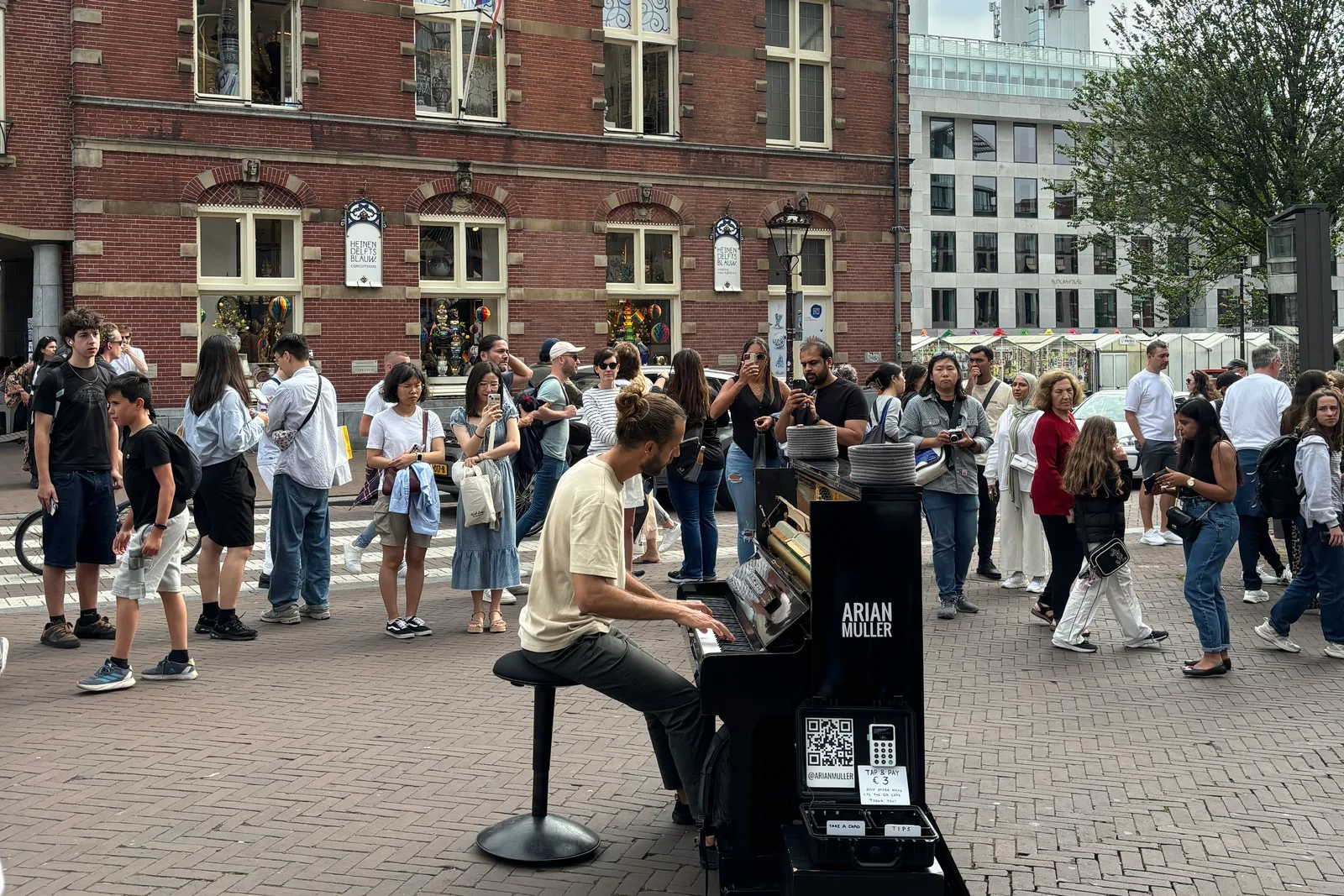
Street performers were everywhere. The one I’ll never forget was the pianist beneath the clock tower, playing Times and then Experience — I was moved before I even knew what had happened. The whole afternoon slipped away, pleasantly wasted.
5.
Back at the apartment, we were both tired. He gave me his room and slept on the sofa himself. A dim room, a soft bed — I couldn’t have asked for more. When I woke up two hours had passed; it was past nine, still light outside. I walked out to find Prashant still on the sofa.
I don’t remember how the conversation started. One topic led to another — the Taiwan stock market, popular culture, how family and life are viewed in each of our countries, what our generations are actually thinking about.
We opened a world map on his laptop. From Taiwan’s snow mountains to Green Island (綠島), the indigenous villages deep in the mountains, the grand landscape of Taroko Gorge — then to India’s coasts, forests, forts, rivers. He opened city after city I’d never heard of, from tiger reserves to waterfalls visible from trains, showing me with excitement the lands he had once traveled, his country, his home. Through his eyes I could feel his love for that land. It didn’t need saying. He loved it deeply.
I really want to go to India someday. I thought it but didn’t say it aloud.
We kept looking at the map — Laos, Cambodia, Angkor Wat; Russia and Sakhalin Island; Romania, Lithuania, Athens — so many places we wanted to go, and so little time, and so little money.
He said he wanted to save up someday and buy a piece of land in his hometown — to keep horses, chickens, cows, ducks, hunting dogs. He might need someone to help look after them.
Time fell short with him. It was suddenly three in the morning.
At the end of our conversation, he asked about my dream goal — where do you see yourself five and ten years from now?
I still get no answer. Housing prices are high, I probably can’t afford to buy a place, and I haven’t entirely decided what I want to do for work.
What I didn’t say was this: my mind was completely blank. The busy, chaotic life I’d been living had left no room to think about the future. It was either work or recovery — just staying present took up most of my life. It had been a very long time since I’d thought about any of this. A shapeless anxiety welled up.
“Don’t worry. You are still young,” he said.
I told him the biggest decision I was currently turning over was whether to stay in Taiwan or try living in another city.
That’s great! You have to leave your own country and go to new places, so you will have a chance to grow. As for me, I had to get out of India so that I could learn new things here. In my 25, it’s the first time that I had travelled abroad. I quitted my job and took a long trip to France. And now, I moved to Amsterdam.
I used to work in India and see my parents five to six times a year. Only when I moved here could I earn enough money to bring my parents here to stay with me — for them, it’s also a new experience. And I still go back to India once a year. In total, I get the same amount of time living with my parents as I did when I worked in India — but the life has become better, isn’t it? That’s a good deal.
It was an answer that didn’t quite answer the question — and yet it held my confusion and unease exactly.
What followed felt like fast-forward. I had never imagined that a stranger could make me remember a city. When I left, I had no idea how any of it would shape the journey ahead. All I did was sling on the familiar pack, say goodbye, and throw myself into the next distant city.
Postscript
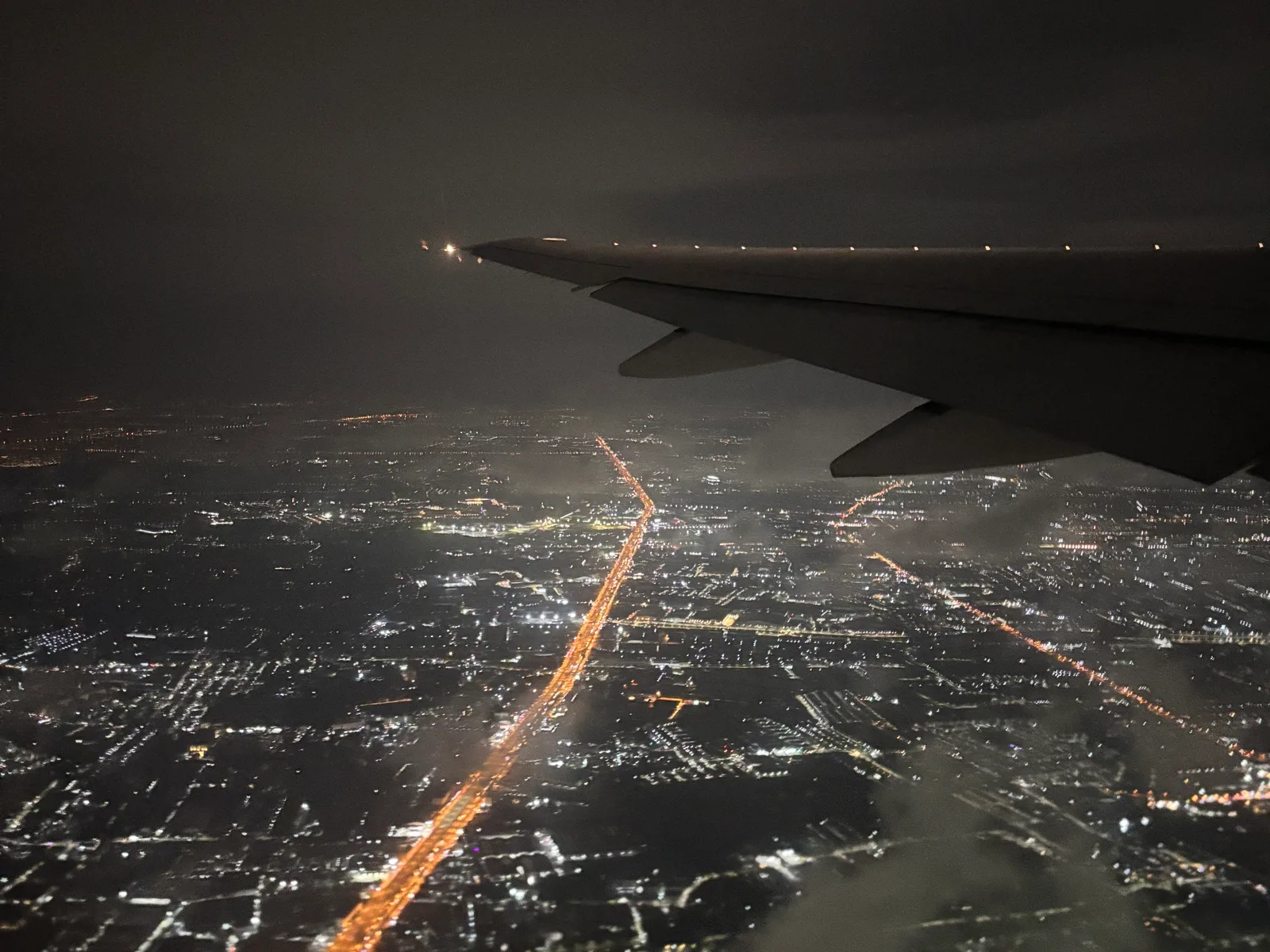
Less than a year later, I’m on a flight to India.
Whether by fate or something more like manifestation — I didn’t overthink it, I just left. I still don’t know what’s waiting for me.
Only time will tell.
Written June 2025