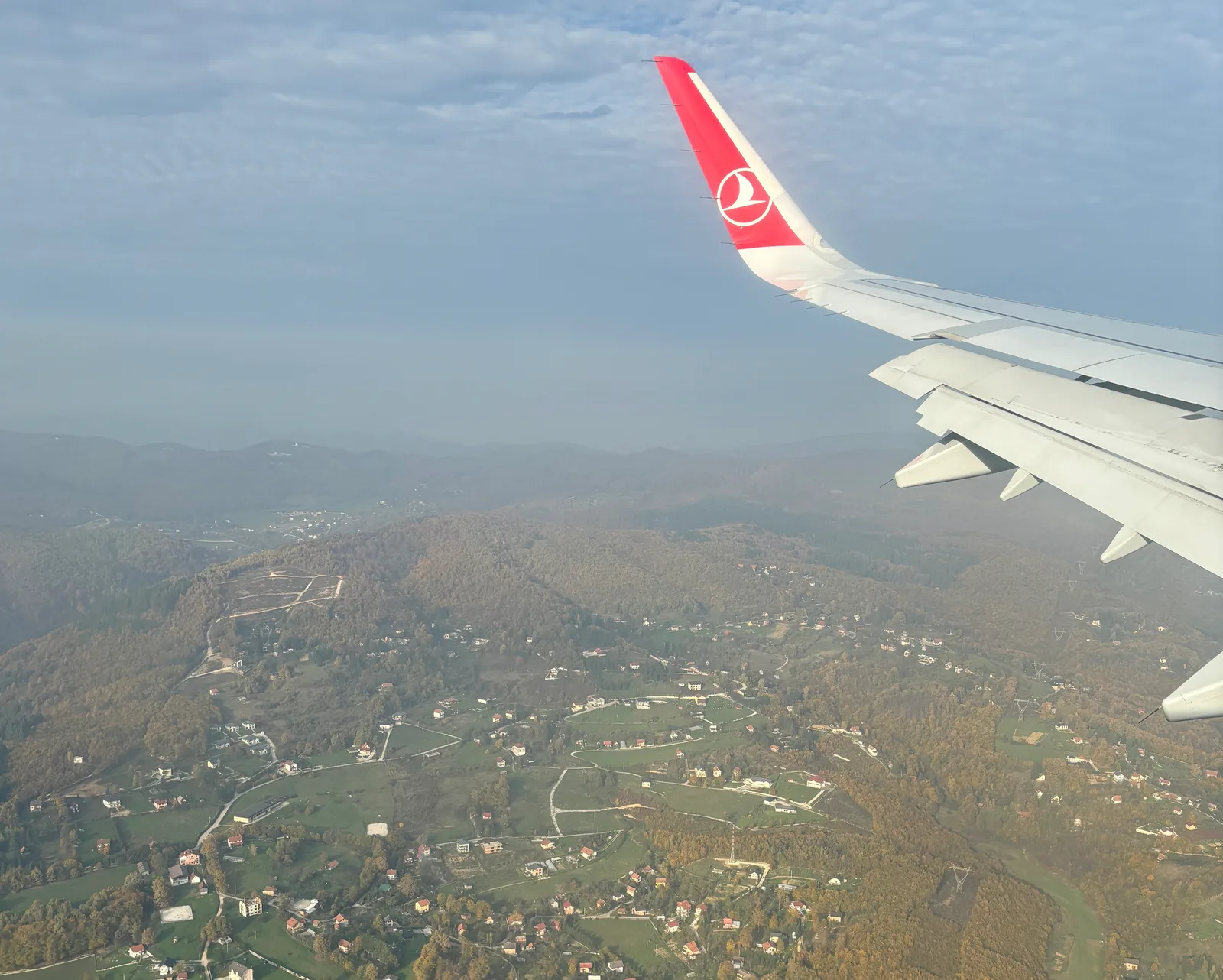
Landing
A city surrounded by mountains.
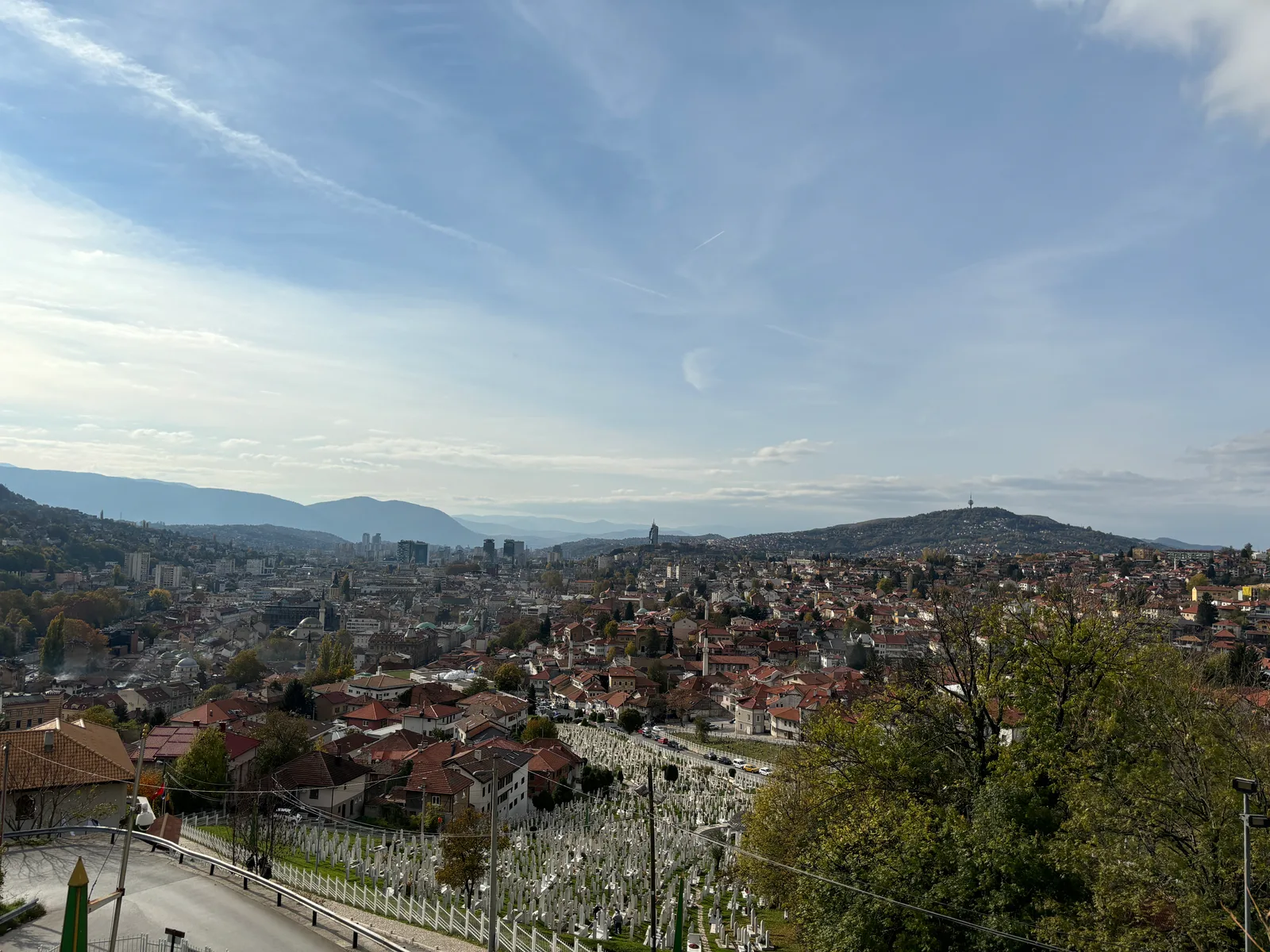
That was my first impression landing in Sarajevo. It was late autumn; the mountains flushed red with the altitude.
The road from the airport into the city passed through a landscape of changing architectures — Yugoslav-era concrete apartment blocks, Ottoman Turkish wooden houses, and the ornate residences left behind by the Austro-Hungarian Empire. The built environment seemed to whisper the city’s fate: life under multiple empires, cultures crossing and fusing, a place that has always been both a strategic hub and a front line.
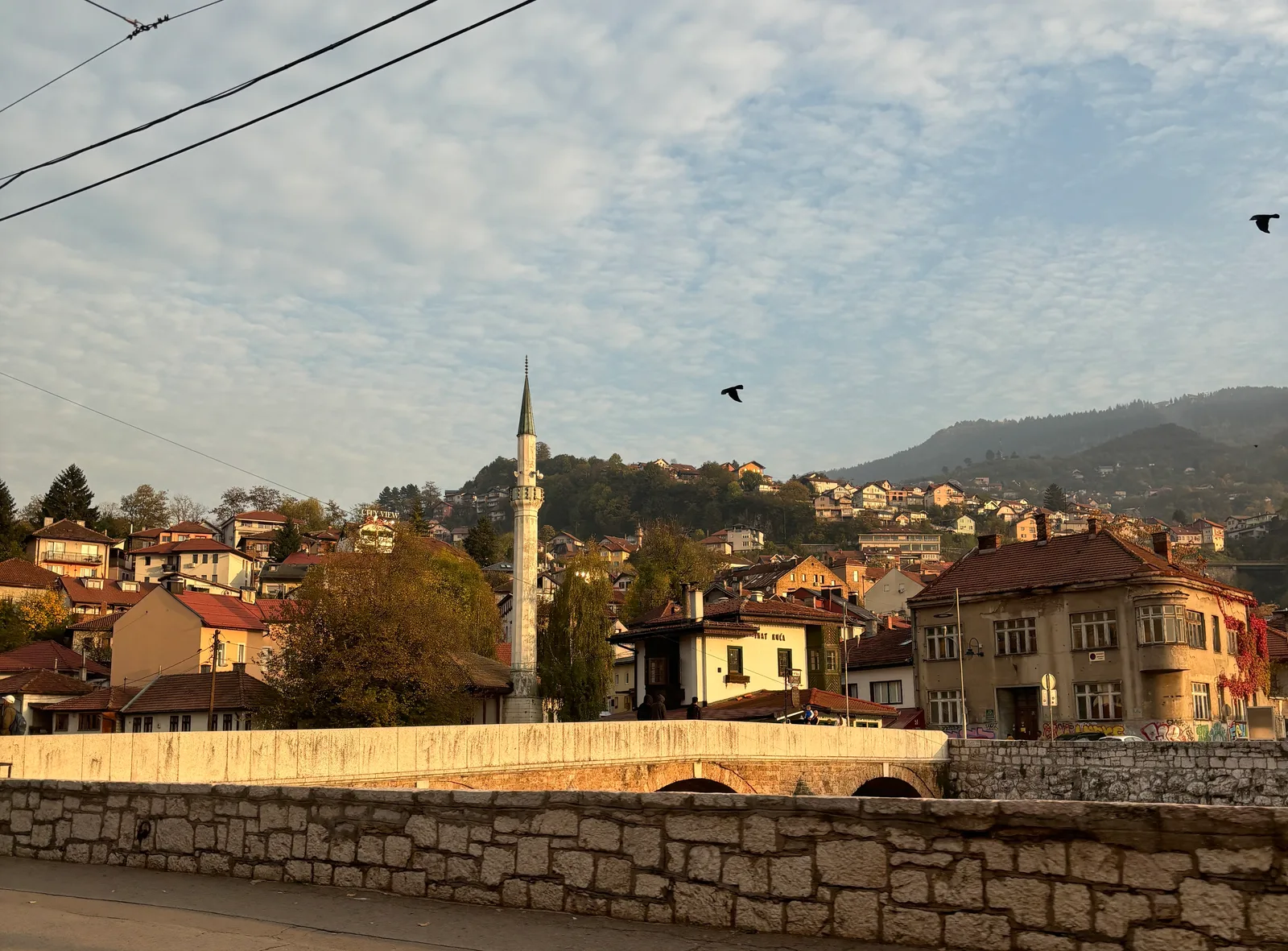
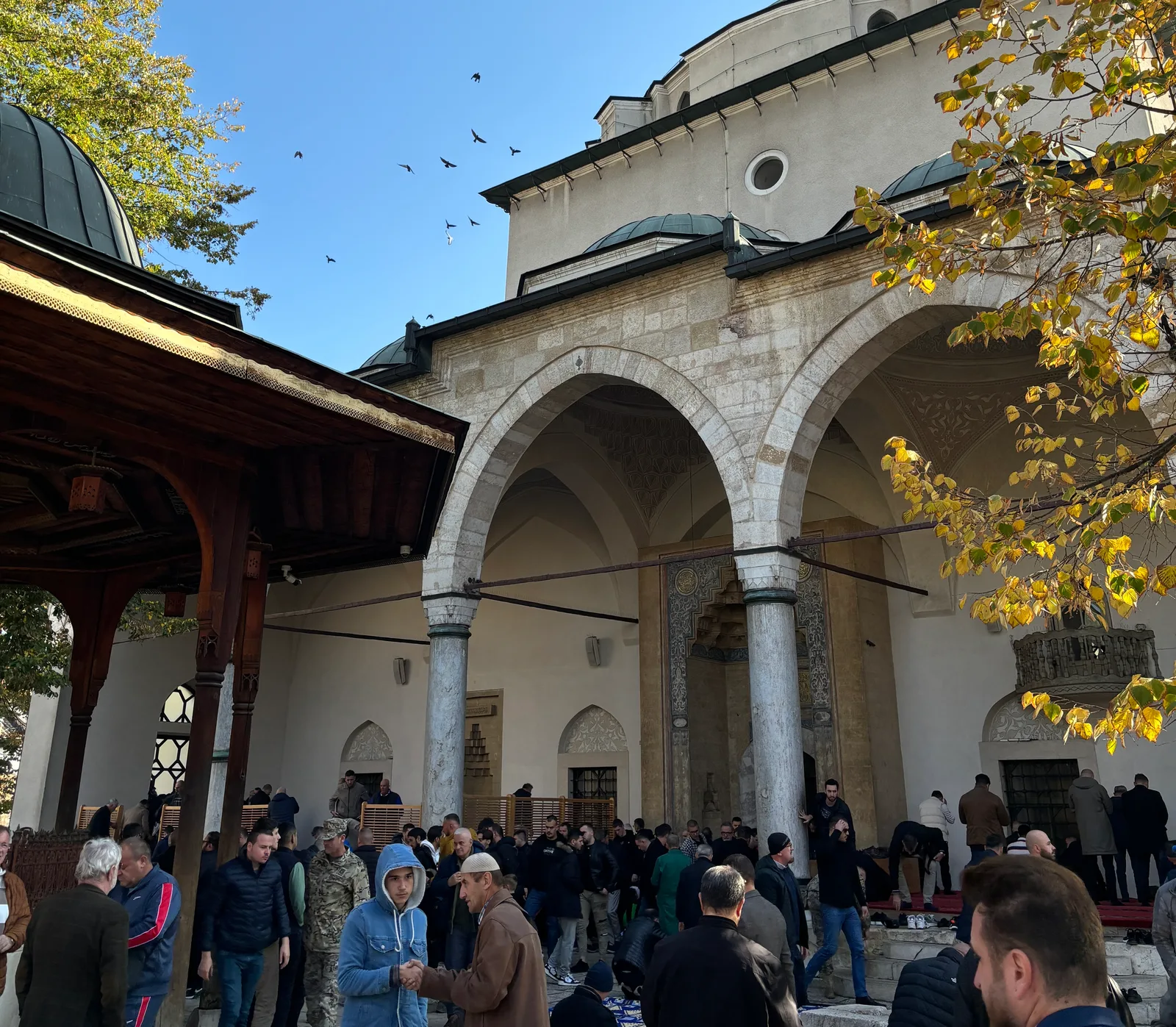
The tiny old town holds a synagogue, a Catholic church, an Orthodox church, and a mosque, all folded together without apparent contradiction. During the day I wandered through and heard bells and the call to prayer alternating overhead. But not every house of worship remains in use; some stand as empty shells, the communities that once filled them long since displaced or forced out.
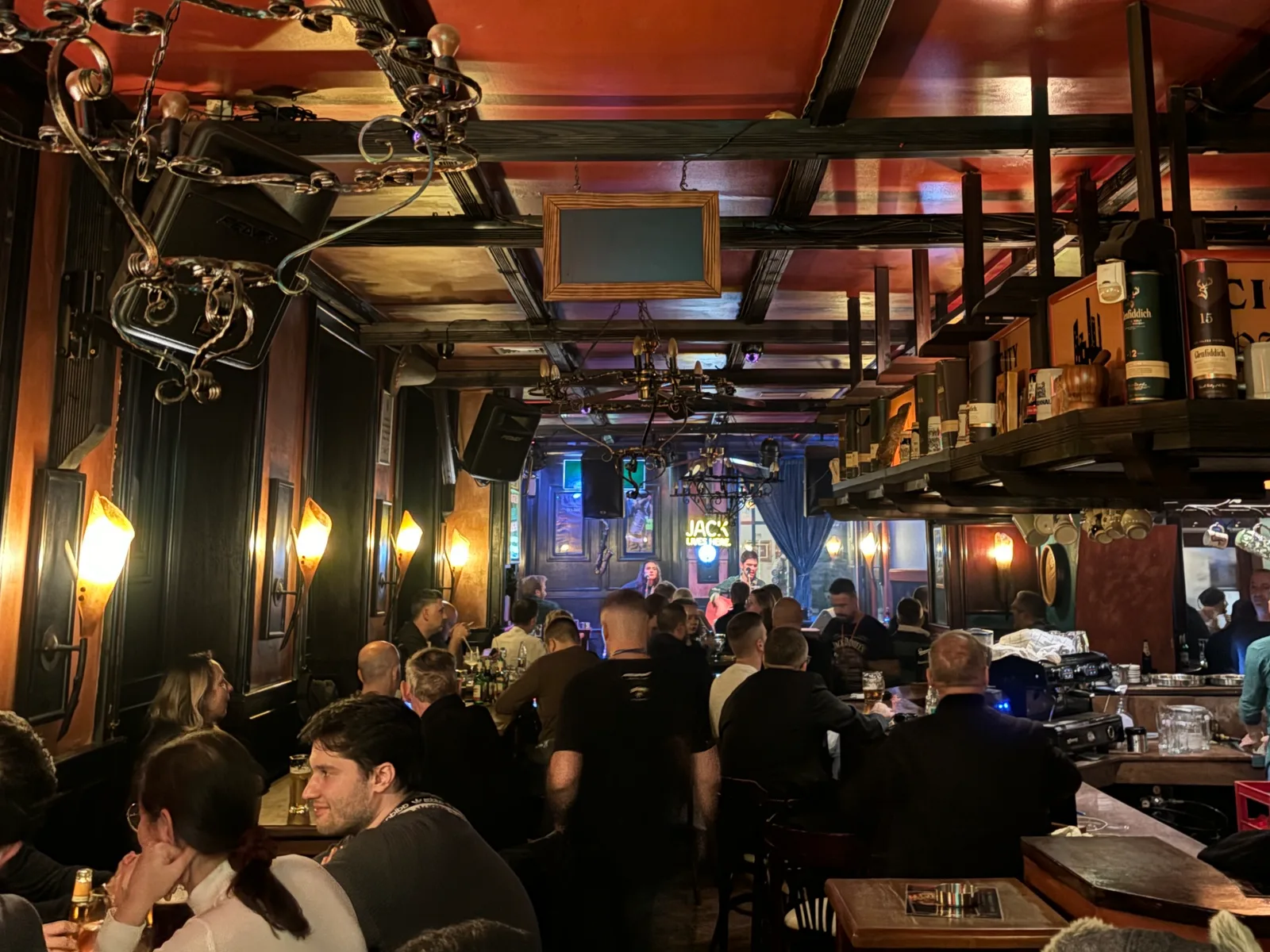
On the evening I arrived, I went to a bar for a social gathering. All sorts of people had come to this city for all sorts of reasons: Turkish students and travelers, conspicuous in number; a Swiss couple who had bought a camper van and were crossing mountains and rivers; a British man who had once cycled the Silk Road. Even today, the city remains a place where paths converge. Its geography makes it a gateway to Europe; its religious character means Muslim-majority countries can come without visa worries; its location outside the EU makes it convenient for those waiting to reset their Schengen visas; and its extremely low cost of living makes extended stays attractive.
Then there were those who had fled the war. Olva came from Luhansk Oblast, a region on the Ukrainian-Russian border. Russian was her first language — the language of school, the language she used with family and friends. When the war broke out, her hometown was swiftly occupied by Russia. She had no choice but to leave; a remote job with a British company allowed her to keep earning a living. For more than two years, she had been drifting through the world.
Far from home and yet deeply anchored to it, she and her friends had been running fundraisers, buying drones abroad and sending them back to Ukraine to support troops on the front line. “This is what we can still do,” she told me.
After the invasion, much had changed for her. She no longer uses Russian — that language belonging to the country that is attacking hers — and has instead returned to Ukrainian, speaking it slowly but claiming it as her own. Some older people still struggle to make the switch, she said, but basically everyone changed immediately. Extended family that once spanned the border has cut ties over national allegiance. She said: how can a person simply ignore what has happened?
Last was Gábor, a Hungarian from the Serbian-Hungarian border. The conversation started a bit aimlessly, but then he mentioned he was studying Community Building, and that he had started a small film club — biweekly evening gatherings at his home, a fixed group of friends sharing a meal and conversation, picking an old film to watch and talking about it afterward.
“Why are you interested in building community?” His enthusiasm was clear; it also touched on things I had been thinking about lately. I wanted to hear more.
He said he wanted to build a community without divisions of gender, race, nationality, or any other identity — a place where everyone could feel at ease and live well together.
He told me about an anthropologist who had once visited a village where many residents had hereditary hearing impairments, and so sign language had become the community’s primary means of communication. Here, sign language wasn’t considered a special language. Whether or not someone could hear was not a reason to be excluded from society.
“Yes, exactly,” I said, and shared a few of my own thoughts. Something about this story felt familiar — I felt I had encountered it somewhere before.
The live music in the bar grew louder. He leaned close to my ear and spoke slowly.
It began with his mother. She is Deaf; he grew up with her. When he was small, she would place her hand on his back and trace letters with her fingertip, teaching him the alphabet one stroke at a time, guiding him through correct pronunciation — even though she herself could not hear. Because of her, he encountered the Deaf community from childhood, and saw a group of people who reminded him of his mother. He eventually learned sign language and has stayed in touch with many in that community to this day.
Because of all this, he said, disability should not be a barrier to entering a community. What we can do is work as hard as possible to create more inclusive environments, so that more people can find their way in. By the time he reached this point, there were tears in the corners of his eyes.
I told him about my friends and about De Voorkamer (the community living room in Utrecht). I said I don’t especially like communities organized around categories. He told me: you already understand.
Whatever was left of the evening dissolved into alcohol and memory.
A Society Divided
One country, two political entities, three ethnic groups.
Bosnia and Herzegovina is the country’s full name, and also the names of its two geographic regions. The majority in Bosnia are Muslims; Herzegovina is dominated by Croats who are predominantly Catholic. Beyond these, the Bosnian Serbs — primarily Eastern Orthodox — have established the Republika Srpska, a semi-independent political entity with its own government, parliament, and military — and its own flag. Open Google Maps today and you can still see the dotted line marking the contested boundary between them.
How did it come to this? The story has to start with Yugoslavia.
Yugoslavia, too, was once a multi-ethnic, multi-faith society. In those years, Bosnian Muslims, Serbian Orthodox Christians, and Croatian Catholics lived side by side on the same land. The strongman Josip Broz Tito (狄托) chose a third path — non-alignment, refusing to side with either East or West. Under his rule, the country was prosperous, people lived well, and citizens could cross borders freely. For the older generation, it was a golden age.
After Tito’s death in the 1980s, problems that had been suppressed began to surface. Conflicts emerged between the central Serbian government in Belgrade (貝爾格勒) and the various regional governments. The unequal distribution of fiscal resources between center and periphery, rampant corruption among officials, and a hyperinflation that compounded everything — all conspired to worsen the situation.
Nationalist sentiment, slowly fermenting, merged with all of this. Slovenia fired the first shot, holding an independence referendum and winning by a landslide. Geographically distant from the centers of power, its war of independence lasted only ten days before it succeeded. The Yugoslav federation began to unravel, one constituent republic after another declaring independence.
Not every country was so fortunate. Through the first half of the 1990s, war raged and casualties mounted. Only after unspeakable tragedy and international mediation did Croatia and Bosnia finally achieve independence.
When nation and ethnicity become intertwined, borders and administrative lines become invisible walls that cleave communities apart. Multi-ethnic groups that had lived together for generations were forced to leave their homes and “return” to lands governed by their own group. Today, Sarajevo is a predominantly Muslim city; in the Republika Srpska, non-Serbs are seldom seen.
“I grew up identifying as Yugoslav,” our guide Edo told me. He had no ethnic identity to speak of — at school, in his neighborhood, everyone played together. It was only on the eve of the war, when he — as a Bosnian — was expelled from the Yugoslav army controlled by Serbs, and then stood on a battlefield watching soldiers in the same uniform he had once worn pointing tank barrels at him, that he understood he was, in fact, Bosnian.
Named and separated, ethnic identity became a tool of state mobilization.
A Childhood Under Siege
The middle-aged men I met in Sarajevo shared a few common traits: they loved to buy the next round, they were extremely chill, and each one had his own story of the war.
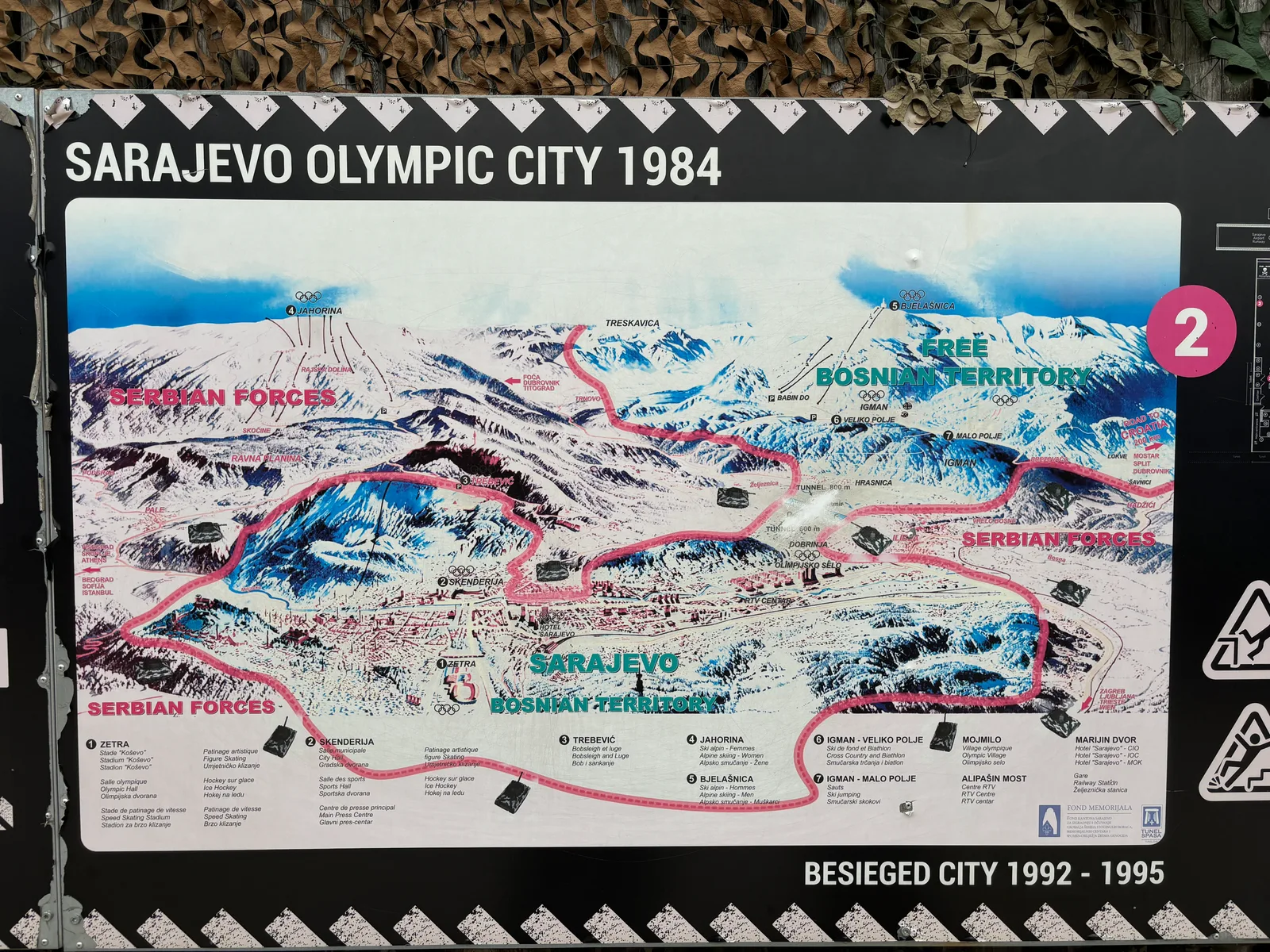
On the eve of Bosnia’s independence referendum, Yugoslav forces secretly moved Serbian troops to the hilltops surrounding Sarajevo. By the time war was declared, the people of the mountain city had no way out. Snipers looked down on civilians from above; artillery was aimed at the buildings below. They had, literally, the high ground.
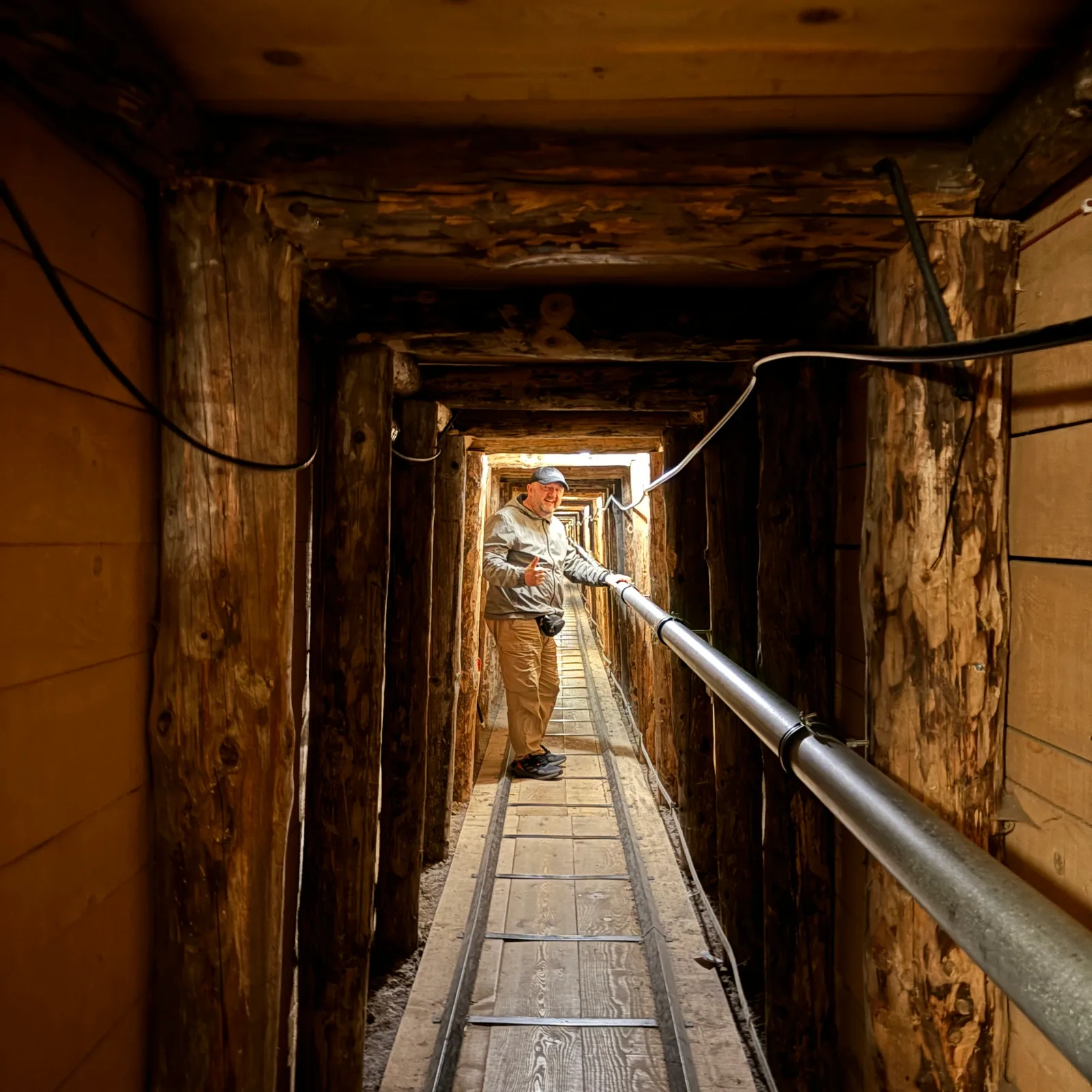
For four years straight. All external routes were completely sealed; only UN supply planes could land at the airport. Eventually people couldn’t bear it any longer and secretly dug a tunnel connecting to the outside world. It could only fit one person at a time — limited help, but help nonetheless.
Edo told me that his lung was once pierced by an enemy bullet. Blood would not stop. He was pulled from the battlefield by his comrades. He still remembers being lifted onto a cart on the tunnel track, drifting in and out of consciousness to the rumble of wheels on rails, being carried out of the city to receive treatment.
Igor, who runs the hostel, said he was ten years old when it began — young, but old enough to feel clearly that war was happening. The first year, the family could only hide inside their apartment; gunshots and shelling rang out from the streets at all hours. Once his family realized the war would not end quickly, his mother took him and fled — through Croatia, through Slovenia, eventually settling in Trieste, a small town on Italy’s eastern border. He spent his adolescence in Italy and across Europe, and only a few years ago decided to return to Sarajevo to open this hostel. The building we were in was the very apartment where he had once hidden from the shells.
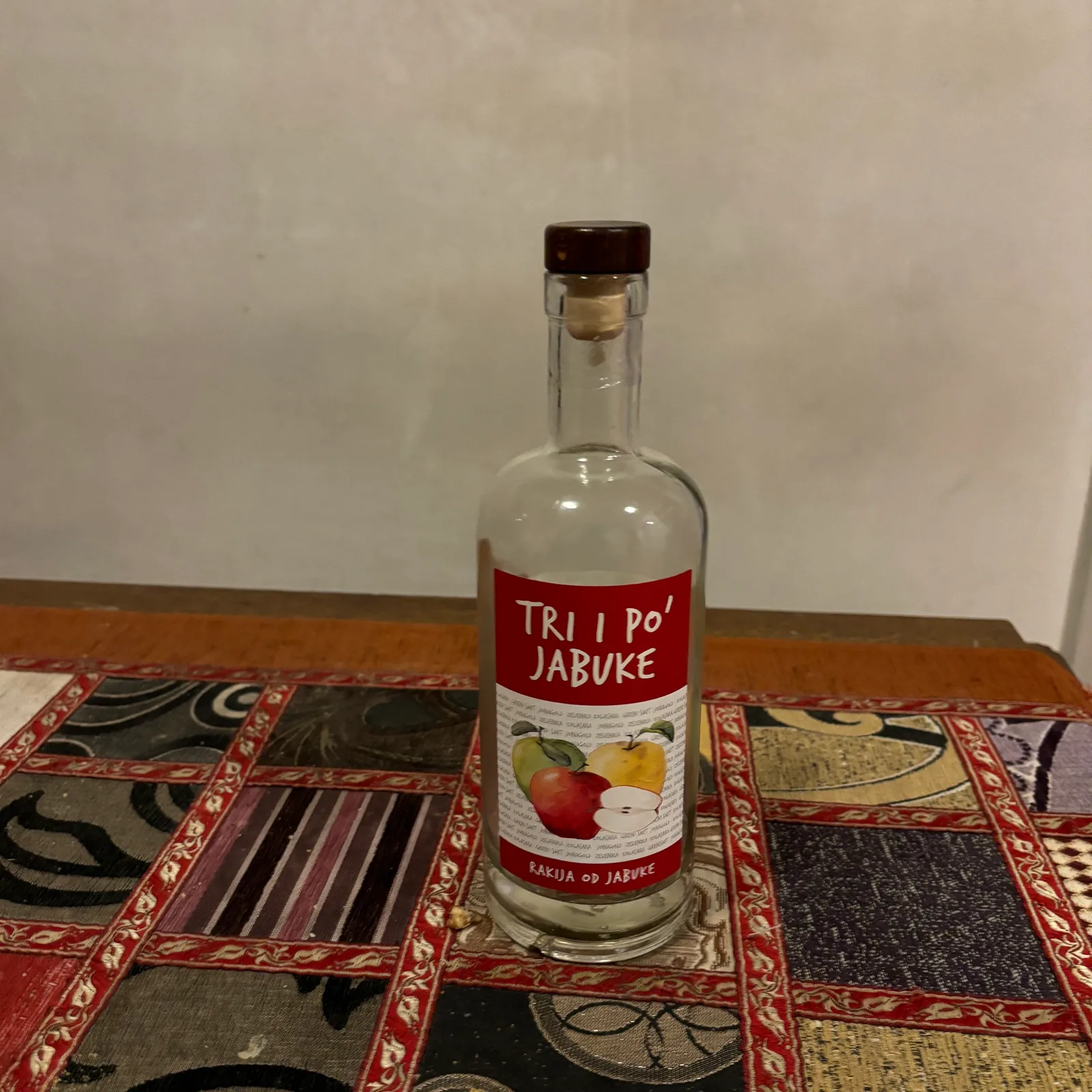
“Do you drink?” He stopped mid-sentence, walked to the refrigerator, and poured two glasses of rakija (a fruit brandy common across the Balkans). I was naïve enough to swallow it in one go — the liquor scorched my throat and I couldn’t speak.
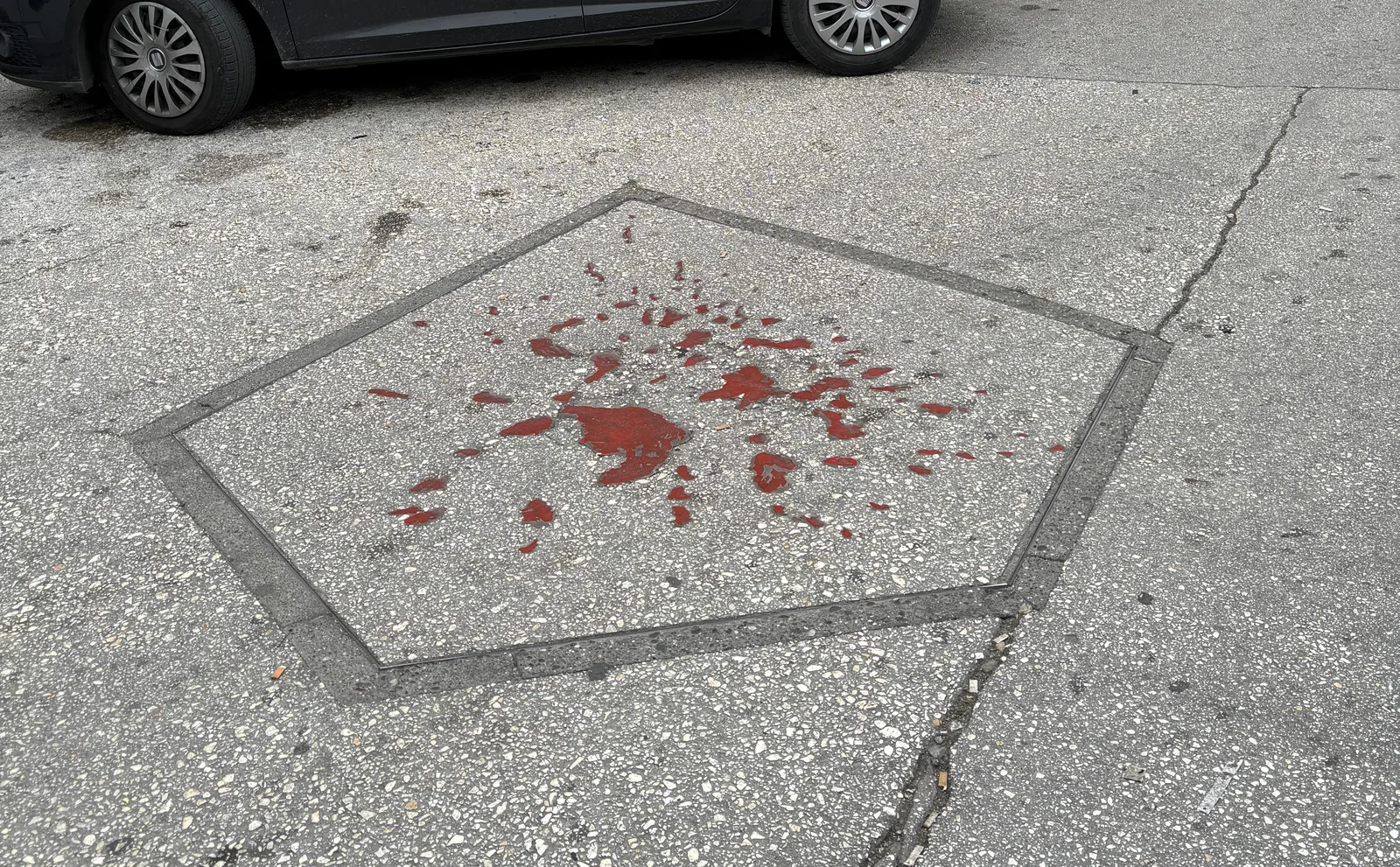
All across Sarajevo, traces of the siege remain: Sniper Alley is a wide open boulevard with no cover on either side; people had to run across it at full speed to avoid becoming a target in a sniper’s scope. The Sarajevo Rose — mortar impacts blasted into the pavement across the city, filled in with red resin the color of blood — memorializes the dead. And then there are the bullet holes pocking the faces of countless buildings, the rooftops blown open.
Another walking tour guide said the war started when he was eight. By ten, he had learned how to shoot. He was one of those who stayed. As the fighting dragged on and the men of the household went to war, children sometimes played in the streets anyway — aware of the risks, but life had to go on.
“That’s why we don’t take everything seriously,” Igor said, as if drawing a conclusion.
We have looked at too much death. And so we know that most things in this world are not such a big deal after all.
He exhaled a puff of smoke, then poured himself another glass.
The Death March
We drove east, along a mountain road.
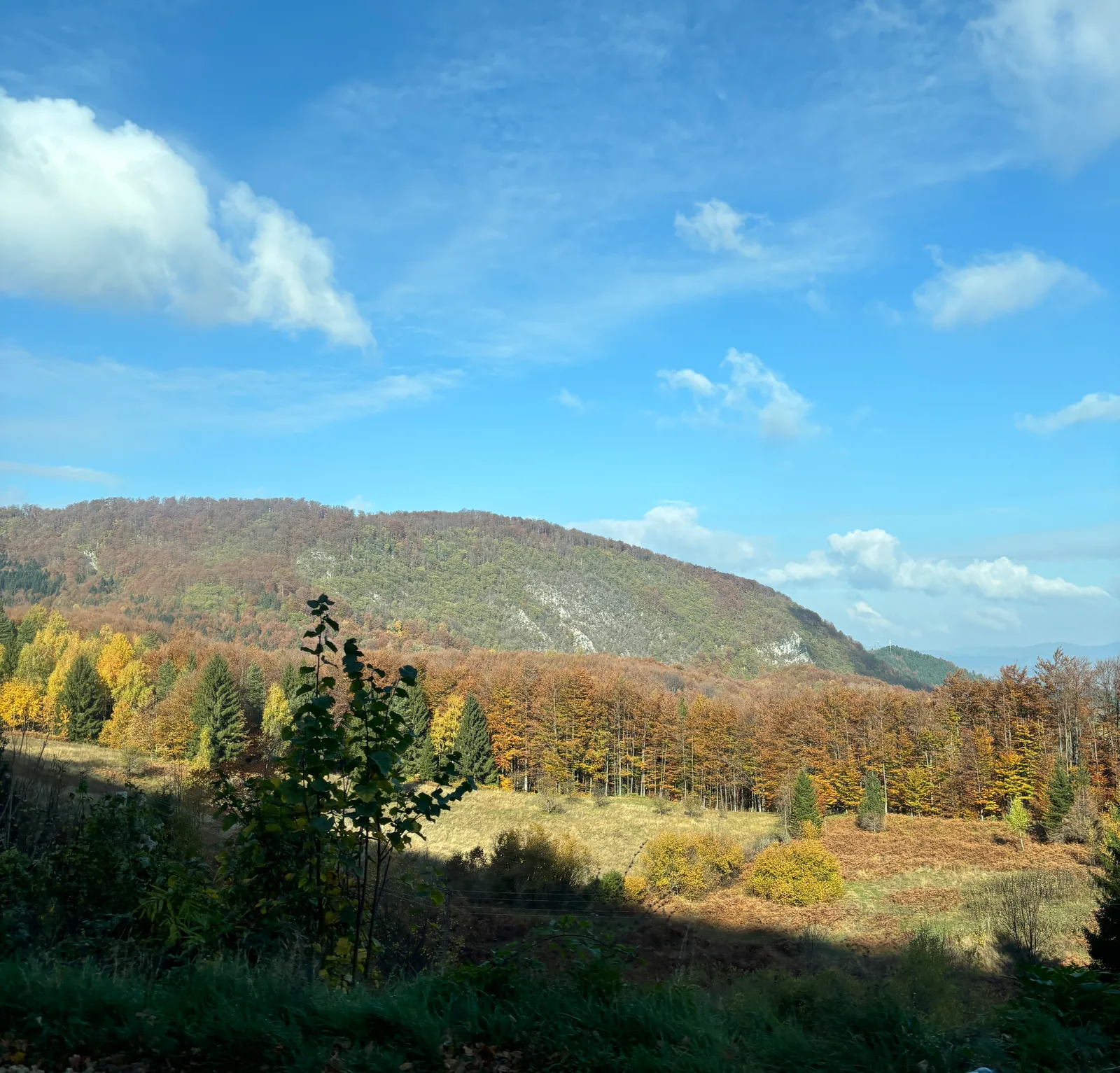
Autumn in a conifer forest is gradient: brick-red, sun-orange, mustard-yellow, deep green — and many colors with no name.
The landscape shifted as we moved. Latin-script signs gave way to Cyrillic. Mosques at the center of towns were gradually replaced by Orthodox churches. Police in different uniforms stood at the roadside; flags I had never seen flew overhead.
“Welcome to Republika Srpska” — a large sign straddled the entrance. We had crossed into Serb-controlled territory.
Our destination was a small town called Srebrenica. Type it into Google and you’ll find:
“Srebrenica Genocide”
After the war began, most of the ethnic Serbs living in eastern Bosnia launched attacks on local Muslim villages. Most Bosnian Muslims were forced to flee to Srebrenica, and the UN subsequently established it as a safe area.
In the summer of 1995, Serb forces launched a systematic ethnic cleansing operation and entered Srebrenica with armed troops. Refugees, pushed back step by step, fled in desperation to the UN military base then under Dutch command. But the UN peacekeeping force was far too small to confront such overwhelming armed strength. Helpless, they turned the refugees away at the gate and left them to the Serb army’s disposal.
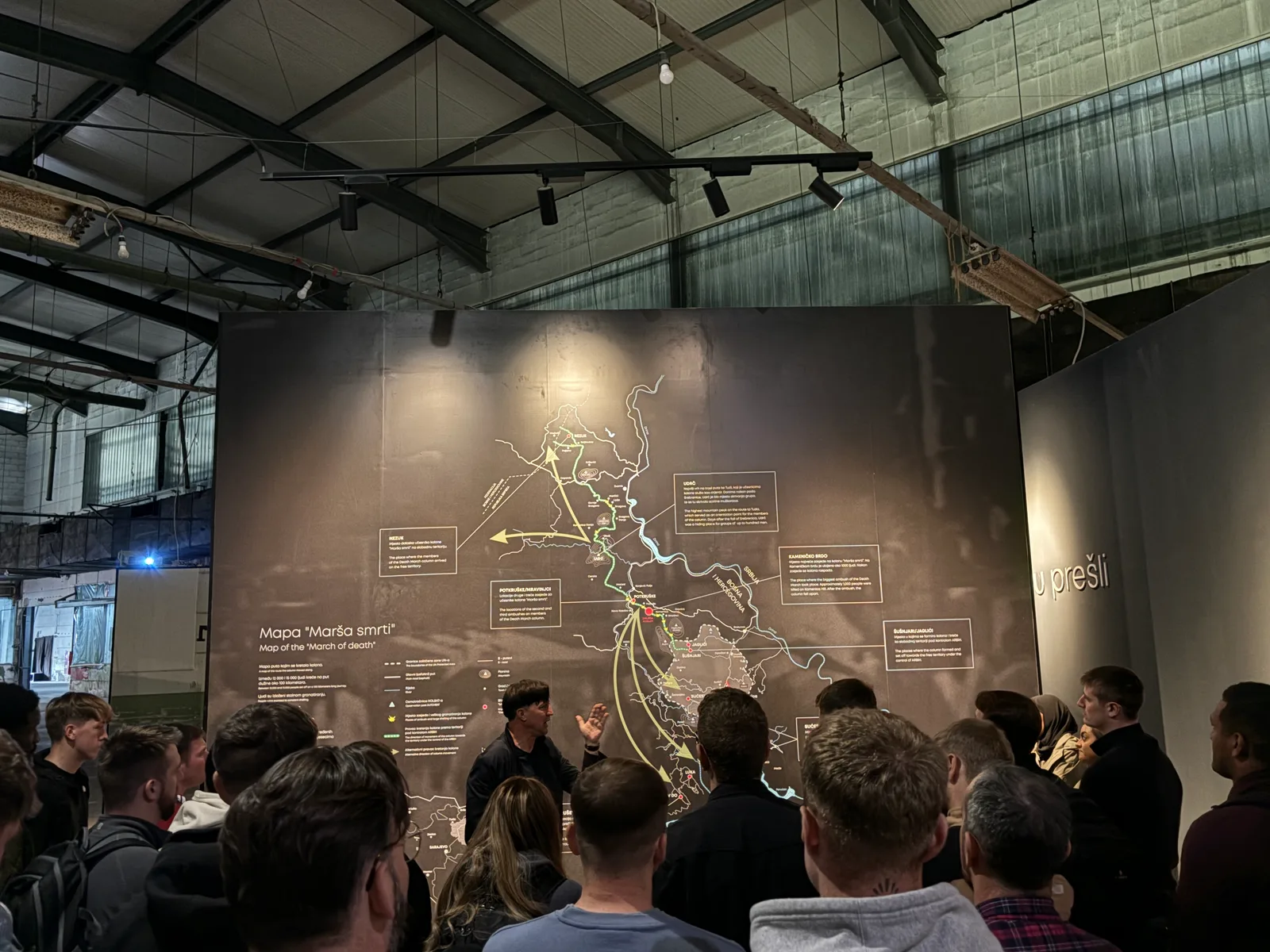
The tragedy began. Adult men were forcibly separated from women, children, and the elderly. The latter were transported to safety; the former were systematically massacred. Acts of cruelty both imaginable and unimaginable were carried out in site after site. The men were sent on the Death March — on foot from Srebrenica toward Tuzla, a Bosnian-controlled safe area, crossing mountains and forests with heavily armed Serb forces behind them and every kind of danger ahead.
A week later, they arrived. More than ten thousand had set out from Srebrenica. Only three thousand survived.
We pressed on. The streetscape began to feel wrong — every two or three houses, a building stood empty. Most had exterior walls either freshly repainted or stripped bare to expose bullet holes.
Edo gestured toward the passing windows with barely contained emotion, identifying each building in turn: this one, dozens of people were executed; that one, the victims were surrounded by soldiers and climbed to the top floor calling for help; this town was the site of a massacre; here used to be the UN military base.
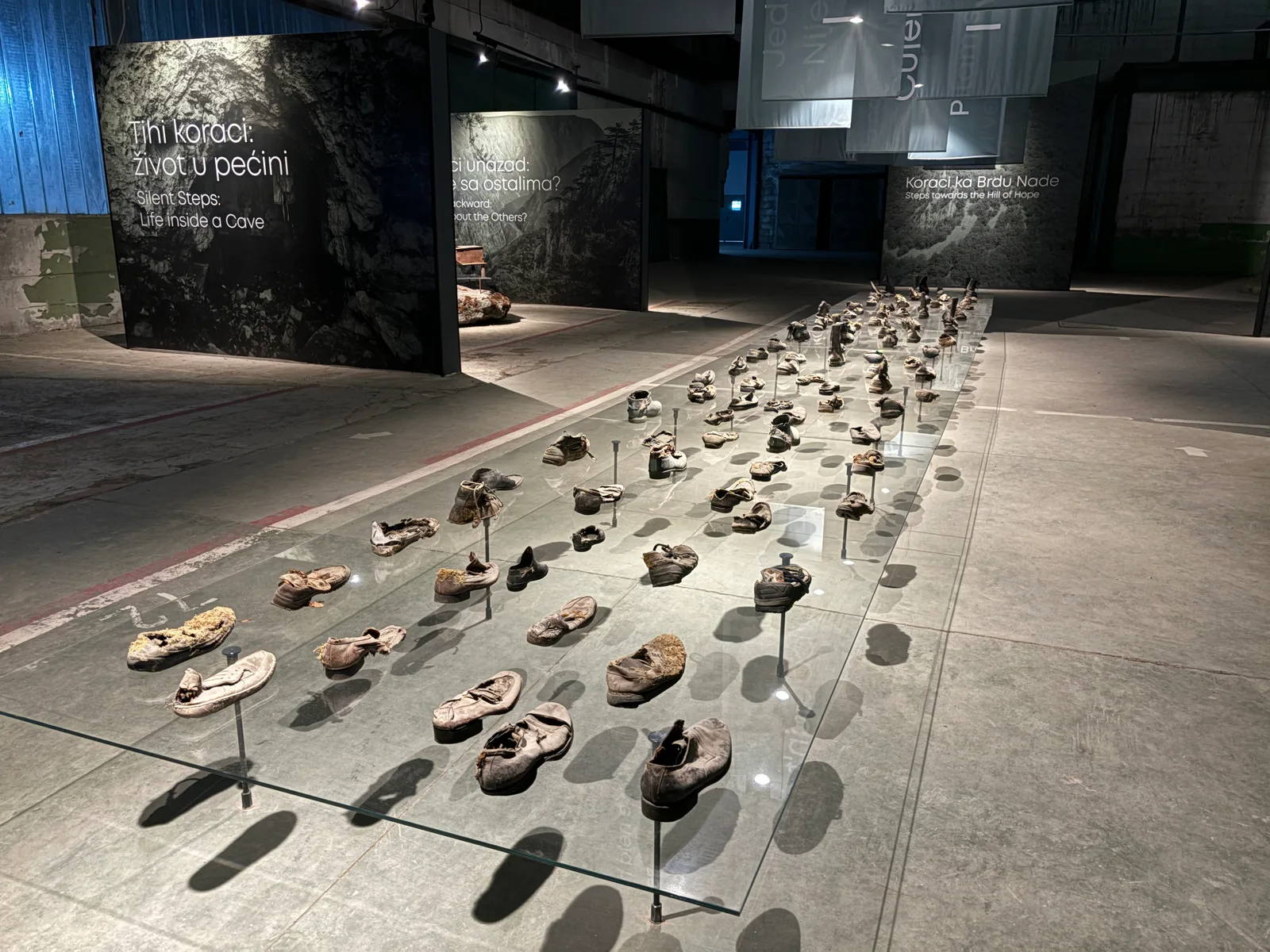
After the war, the former military base was converted into a genocide memorial museum. Over the entrance, in large letters: “The Failure of the International Community.”
Inside, screens played footage of the events — frame after frame: an international community unable to intervene, testimonies from defendants at the International Criminal Tribunal, mass graves in the countryside outside the city, bodies buried deep in the woods, the massacre footage that became crucial evidence. The image that stayed with me longest: a group of men, hands bound behind their backs, eyes covered, shot one by one in front of a camera. Two were left to carry away the bodies of their companions. When they finished, they too became victims.
Skeletal men. Mothers begging for their children to be spared. Witnesses weeping. Survivors who could only escape by lying among corpses.
Quiet sobbing filled the room. At intervals I had to stop, breathe deeply, temporarily shut down my emotions — just to keep watching.
A school group happened to be visiting. I joined their tour.
Hasan, the museum’s director, shared further details about the war. He said every male relative he had died in the massacre. If he could do it over, he admitted, he would not have chosen to stand in this position. But precisely because it had already happened, he had decided to stay — to keep making the world aware of this tragedy, to keep speaking for those who could no longer speak. To let the voiceless sound their voice.
In 1995, he walked the Death March with his family. Years later, he buried his father’s remains with his own hands. Two years after that, he buried his twin brother. When he and his mother walked to the cemetery, they were jeered and mocked by nearby Serbs; one person spat at him without mercy. He kept asking himself: why won’t they acknowledge what they did? Why must the dead still endure the cruelty of their perpetrators?
The Srebrenica Flower is the symbol of this massacre. Its green center represents the dead, covered with cloth; its white petals represent the women who came to see them off.
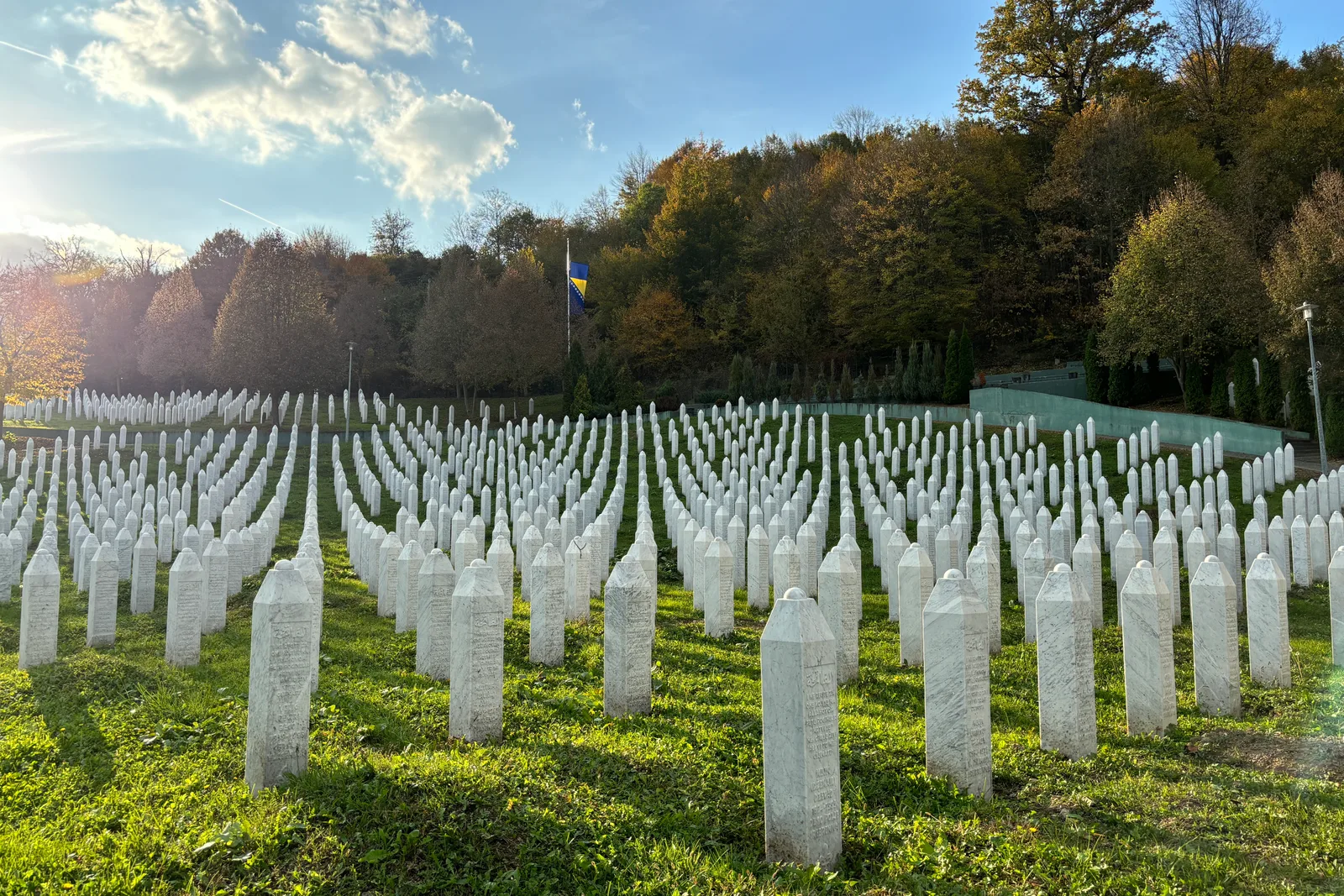
Across from the museum is the memorial cemetery. Thousands rest here.
The day was clear. Tombstones spread across the valley. Even having steeled myself, the sheer number was staggering — no end in sight. Muslim gravestones have a particular shape. Looking closely at the dates carved into the stone, I found that some of those who died were my age.
I had finally come to this place.
Those Who Remained
“How’s your day?”
I went to Srebrenica today, I told Igor.
Want some rakija? This time I didn’t hesitate. Alcohol might be the fastest way to forget pain. He said to let him know if I felt like talking.
I told him: the more I see, the fewer answers I have. I don’t know why I traveled this far to look at something so painful, and I don’t know what there is left to do. I laid my confusion in front of Igor, and he simply listened. In the end, the alcohol knocked me out before he could say anything serious in reply.
Was there really nothing to be done? That day at the museum, Hasan had said something.
After dealing with his family’s remains, he made up his mind to enter the museum and begin working — to seek the truth his community was owed. His team went from home to home, recording oral histories. They organized professionals to go into the forests searching for massacre sites. He himself became an expert consultant, continuing to write publicly, traveling the world to share the story, teaching in the museum — and has not stopped since.
“We don’t do this only for ourselves. Genocide is against humanity — all of humanity needs to understand the truth, understand what went wrong, and not repeat it.”
Or take Funky Tour, the company that brought me to Srebrenica.
After the war, travelers began entering Bosnia, but most treated it as a transit point, still carrying the negative image of war with them, reluctant to go beyond Sarajevo, sometimes laden with Western misunderstandings. Funky Tour simply wanted to challenge those assumptions. They trained survivors from the front lines to become guides, sharing their lives and the stories they wanted the world to hear. They designed war-related itineraries so that outsiders could more fully understand the wounds of this land. And not only war — from architecture to hydrology to food, they brought people to a fuller, more varied understanding of Bosnia.
I was only an outsider passing through. Afterward I went on something of a museum binge, wanting to understand as fully as possible what had happened — about the Bosnian War, the siege, the genocide, and more. The stories were still heavy, still shocking — but I was more prepared.
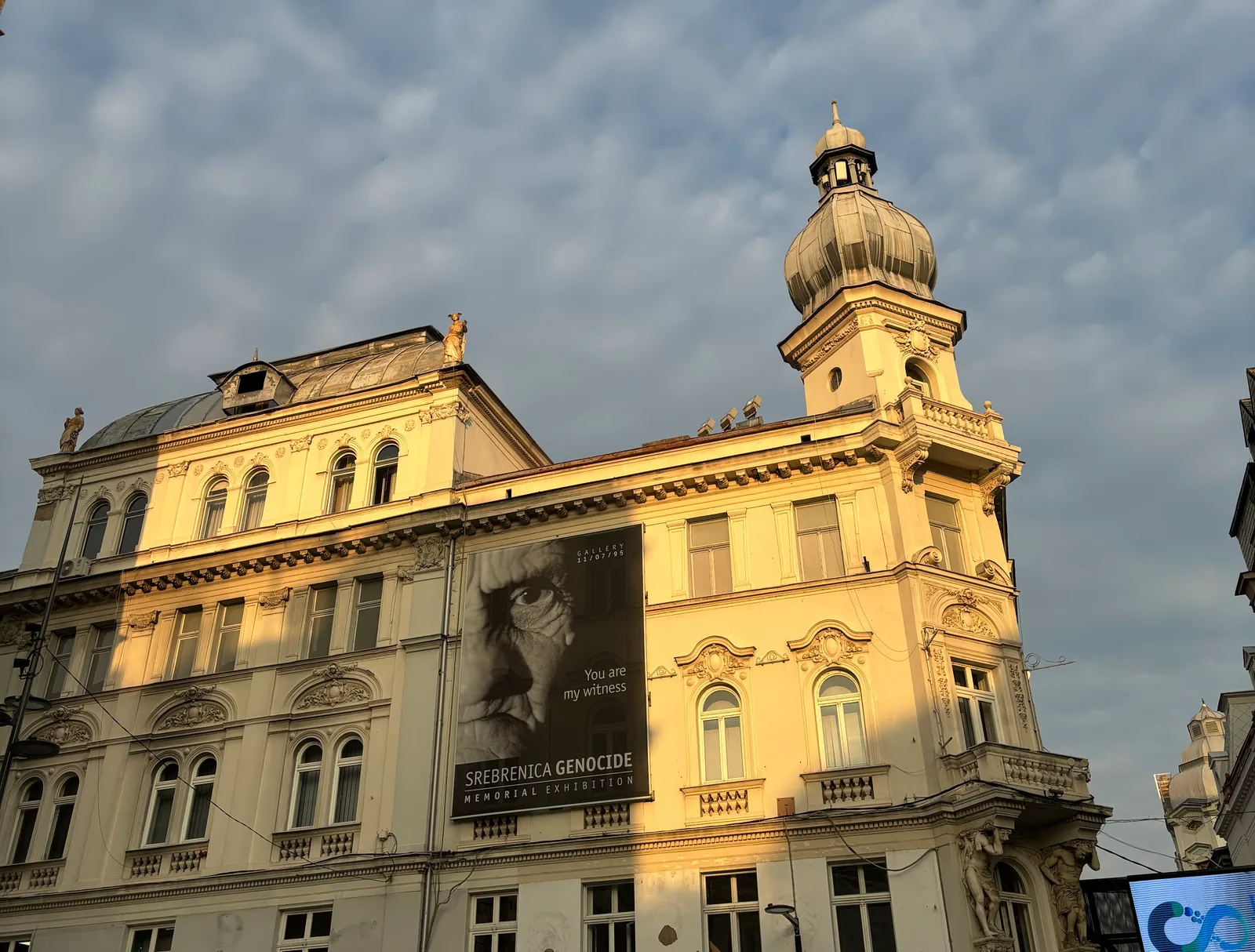
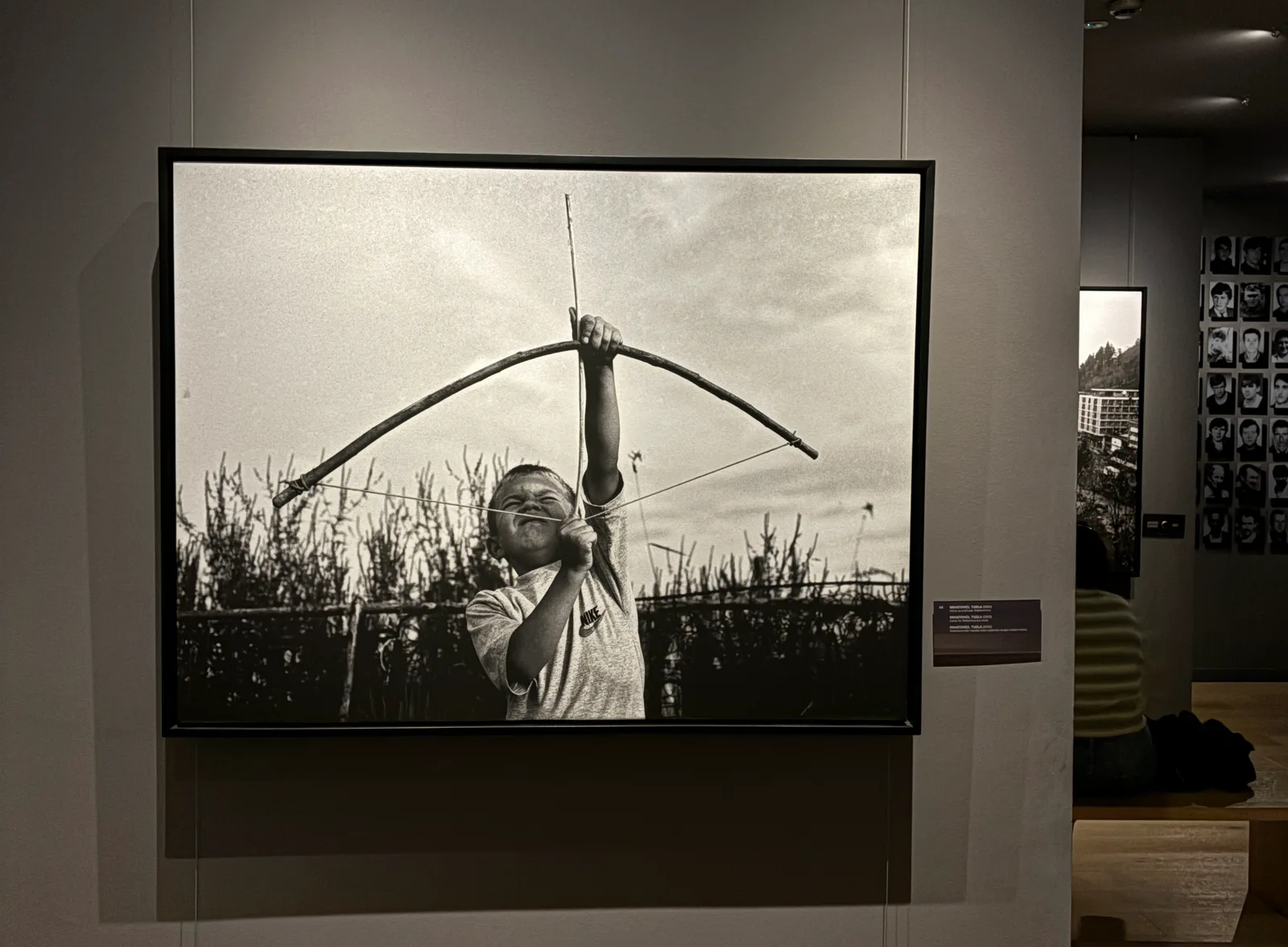
What struck me most was Gallery 11/07/95 — a photography exhibition documenting the Srebrenica genocide. No text; only photographs and audio.
The single uphill road to the refugee camp. Fingers marked from blood draws for DNA identification. Death notifications summoning families to collect a loved one’s belongings, years later. A morgue filled with unnamed remains. Hundreds of coffins laid out in a room. Buses returning to the cemetery every July 11th. Hands using shovels to bury a beloved person. Shovels bent and worn out from use. The most devastating photograph: a boy standing alone in the middle of a field, holding a bow and arrow made from branches, eyes closed, straining, shooting his hope toward the sky.
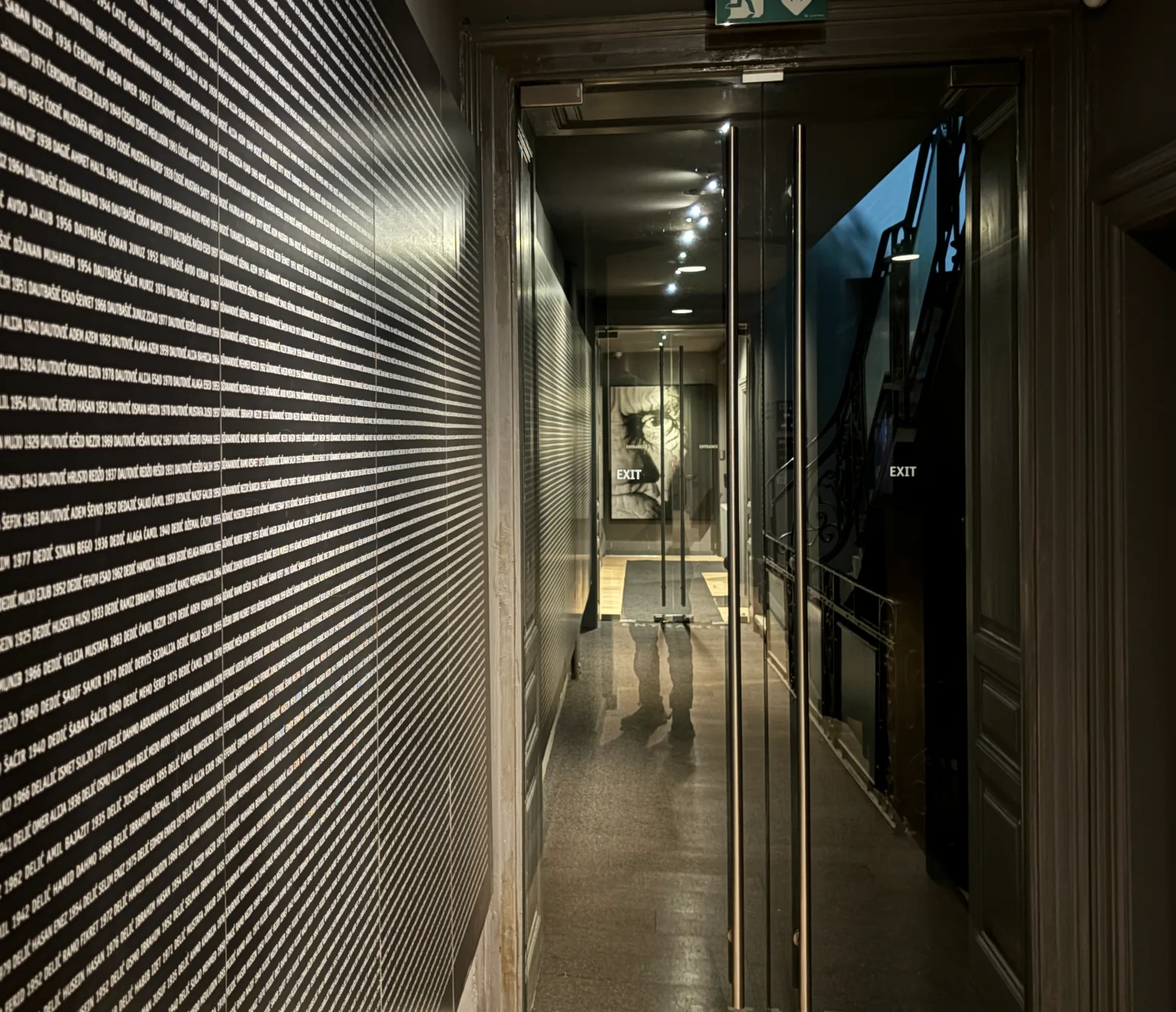
At the end of the exhibition was a long corridor — the names of all the victims, dense white text on black, stretching what felt like dozens of meters. At the end of the corridor, a museum poster: an old man’s eyes looking directly at you, and above them, the words:
You are the witness.
Can We Learn from the Past?
Can humanity learn from history?
After all this time, I find myself thinking the more pressing question is: are we even learning from the same history?
Edo told me that Serbia has to this day not acknowledged its crimes, and refuses to hand over war-related documents — making it extremely difficult for the international community to assign accountability. Their school curricula, meanwhile, minimize Serbia’s role as perpetrator, and frame Bosnians as having been equally aggressive: everything was only self-defense.
Or take a longer view: during World War II, Croatia’s Ustaša regime became a Nazi puppet state, mobilizing Croatian nationalism to carry out ethnic cleansing against Serbs. Walking through Belgrade (貝爾格勒), the Serbian capital, I saw spray-painted on a large building: “The only genocide in the Balkans was against the Serbs.”
In each side’s own narrative, it is always the victim, never the perpetrator. Violence is always in defense of the people, in service of stability, in self-defense. There is never any systematic ethnic cleansing; we are the ones who have been wronged; we bear no responsibility.
“That’s why I hate nationalism,” Igor said, on the night I was nearly unconscious.
Borders protect and exclude simultaneously. Postwar Bosnia became a Muslim-majority country — giving those who had suffered through the war a place of safety — but compressed the living space of other faiths. The Republika Srpska defined a territory for Bosnian Serbs — but also turned what had once been Bosnian land into somewhere Bosnians rarely enter.
Inciting hatred and starting a war is so easy. Reconciliation is a road without end — if there is an end at all.
“I think humans are still incapable of learning from history,” said one of my travel companions. Looking at Ukraine and Gaza today, and the wars happening all over the world, it is difficult to be optimistic.
Still no answer.
On the last day of the trip, I went to a hilltop overlook on the outskirts of the city.
Looking down: cemeteries stretching across the mountain slopes. Houses built in every style. People moving along the streets. A mosque and a church. Smoke rising from a chimney. A bird gliding across the sky.
Whatever happens, we still have to keep living.