Especially lately, I often have the experience of knowing what I want to say and being unable to say it — something close to aphasia.
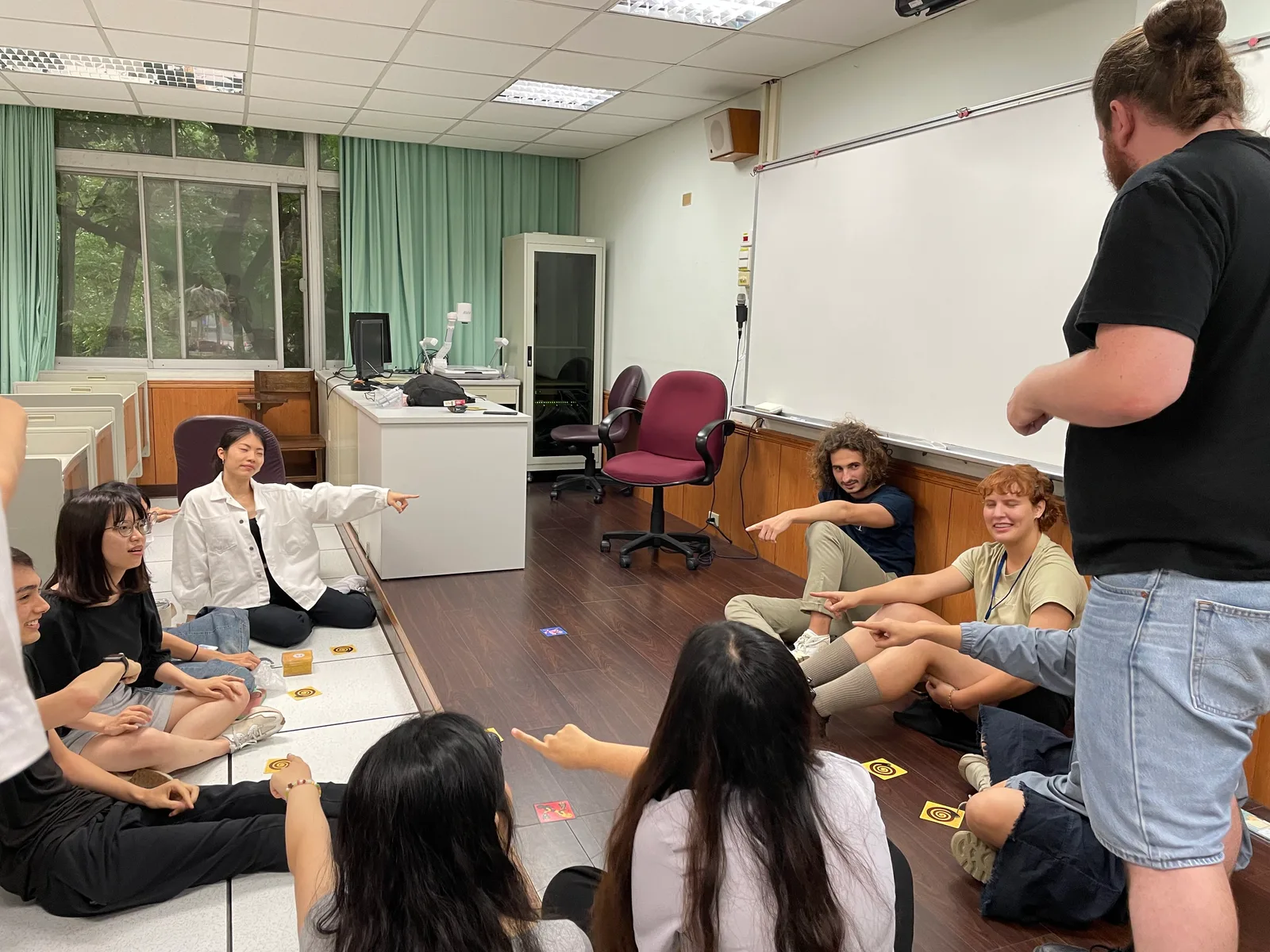
In French class, for instance — we always have a discutez avec votre voisin segment, and the classmates around me will naturally start speaking French. But I can’t find any momentum at all. I want to speak in Chinese, but I worry about disrupting other people’s practice. So I slowly flip through the dictionary, searching for the most fitting words, and then quietly produce one or two sentences I’ve rehearsed in my head first.
Or in Spanish class, where I can only read the words off the whiteboard line by line, and the moment I look away, my mind goes completely blank — I can’t produce even a fragment. I keep flipping back to the textbook, or relying on the friendly classmates beside me: ¿Cómo se dice en español?
When it’s an unfamiliar language, I can console myself — I’m only a language learner; this is expected. But lately, even languages I consider myself comfortable in have started to feel strange.
Last semester, I interviewed my grandmother for an oral history project. She spoke sentence after sentence in Taiwanese, and while I could more or less follow, I couldn’t ask my questions in Taiwanese — only produce something awkwardly translated from Chinese, stringing together something barely passable. The interview didn’t stall or break down, but I couldn’t help wondering: if I had been able to ask in Taiwanese, might she have had the opportunity to share more?
Or there was the stretch of time when I was working as a design thinking coach — whenever I needed to explain an abstract concept to participants, I could never find the right words. These moments of losing language were somehow more frustrating for that.
And yet — paradoxically — this aphasia has also made me fascinated by language. There’s something romantic, I feel, about using language to step into different worlds of meaning. To be able to pick out some things you already recognize from someone’s stream of speech, and from that, begin to notice what’s different.
Like being able to discuss Taiwanese history in French with classmates — knowing that the Sunflower Student Movement is le mouvement tournesol des étudiants, or that the 823 Artillery Bombardment is la Crise de Quemoy et Matsu — and that they really do say “Quemoy,” not “Kinmen.” A room full of Taiwanese students learning French and a French student learning Chinese history, all finding common ground. The scene was almost magical-realist.
Or the English conversations with travelers from everywhere — on trains, beside temples, in the common rooms of youth hostels. English is no one’s mother tongue, but we still work hard to share what we each understand of the world, what we’re thinking about, through whatever vocabulary and grammar we have.
These are probably some of the reasons I signed up for so many language courses this semester — even knowing I’m falling further and further from the graduation requirements, I insisted on doing it anyway. When friends ask why I want to learn languages, why I want to keep going, I often can’t give an answer that satisfies conventional expectations. But sometimes learning doesn’t need to have a purpose — or so I tell myself.
Then, last week, the Introduction to Linguistic Anthropology course happened to cover a study of Pirahã, a language of an Amazonian people. In Pirahã, there are no myths, no history, no concept of spirits. They value only the present — and describe only what has been seen or experienced in the body. For them, dreams are real; the future is illusory. Their language reflects the world as they understand it, and that worldview is passed from one generation to the next.
It made me understand something. For me, learning language seems to be a kind of capacity to cross borders. Even living on an island nation, language lets me, however partially, come closer to people in faraway countries — to understand what they care about, how they see the world. To see what’s scattered across different places, while also reflecting on what I have, and what I truly care about.
Aphasia as a kind of losing one’s way. Fortunately, I have already set out.