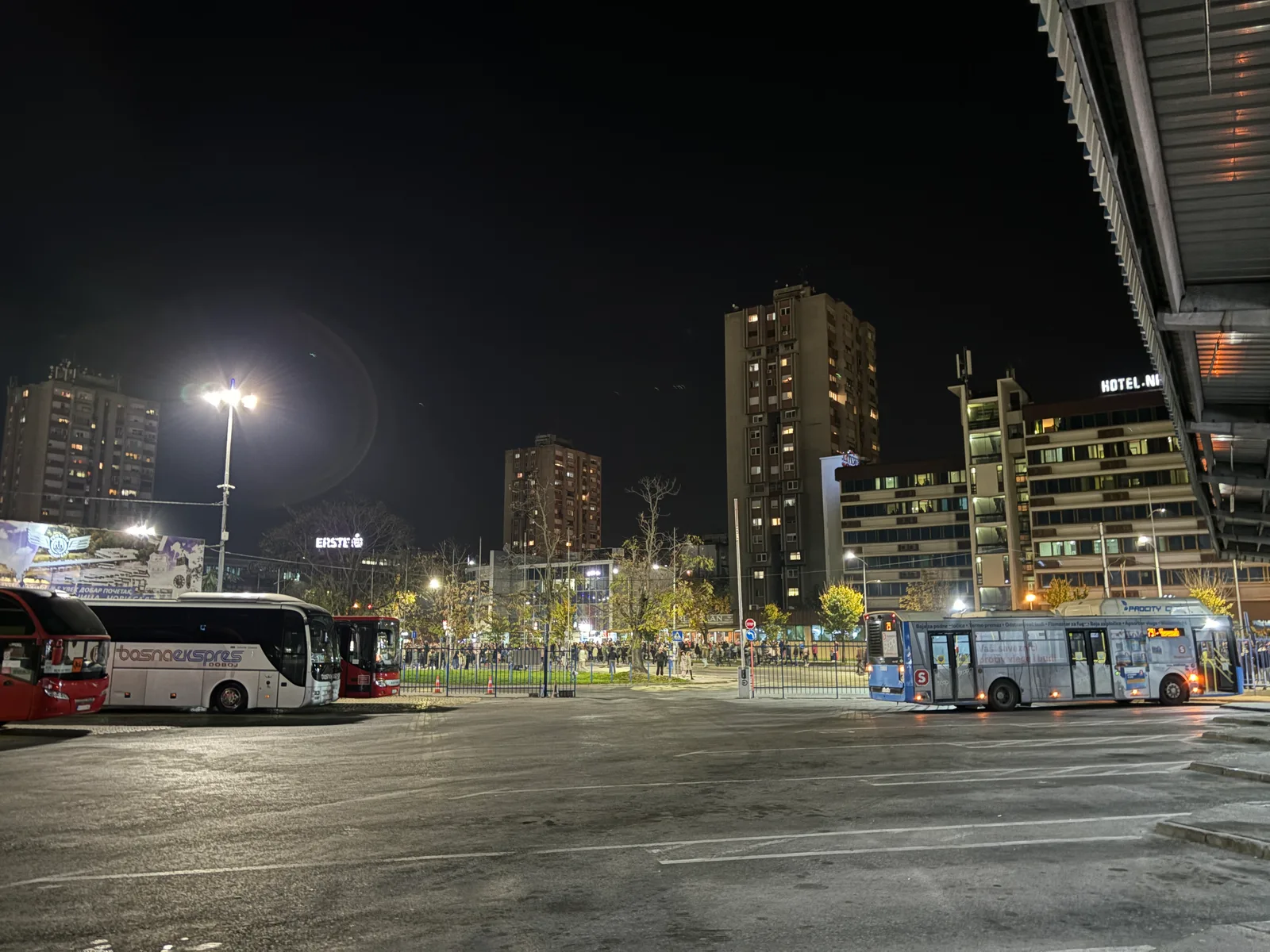
This city hadn’t been part of the plan. In the first half of the trip, several different travelers, hearing I was heading to Serbia next, had all independently said the same thing: Novi Sad was their favorite city — and compared to it, the capital Belgrade felt dull.
Novi Sad is Serbia’s second-largest city, eighty kilometers from Belgrade. It’s nowhere close to Belgrade in population, infrastructure, or urban development — Belgrade was once the center of Yugoslavia, and the difference shows. After weighing it up, I decided to squeeze in a day trip during what time I had left.
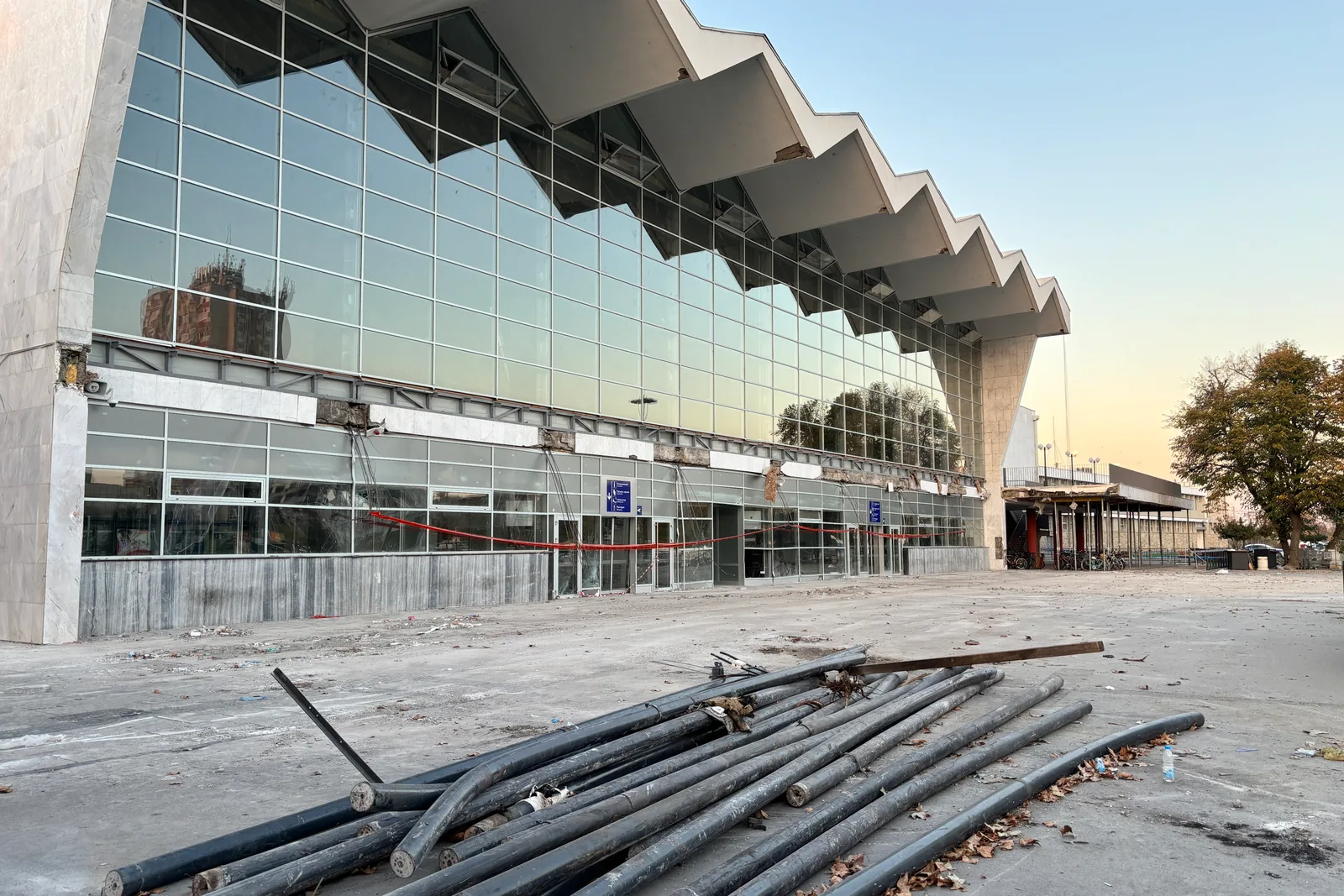
The travel gods have never been on my side. A few days before I set out, Novi Sad made international news. On a quiet Friday midday, the concrete canopy over the entrance of the central train station collapsed without warning, falling heavily onto the people passing through or standing beneath it. Fourteen people died; three were critically injured.
I was probably too tired from traveling to think carefully about the risks — and besides, I figured that after such an accident, everyone would be more careful. And I didn’t know when I’d be back. I decided to go ahead as planned.
The Balkan Transit System
After the accident, Novi Sad’s train station was immediately closed. What had been a thirty-minute high-speed rail journey became an hour-and-a-half intercity bus ride.
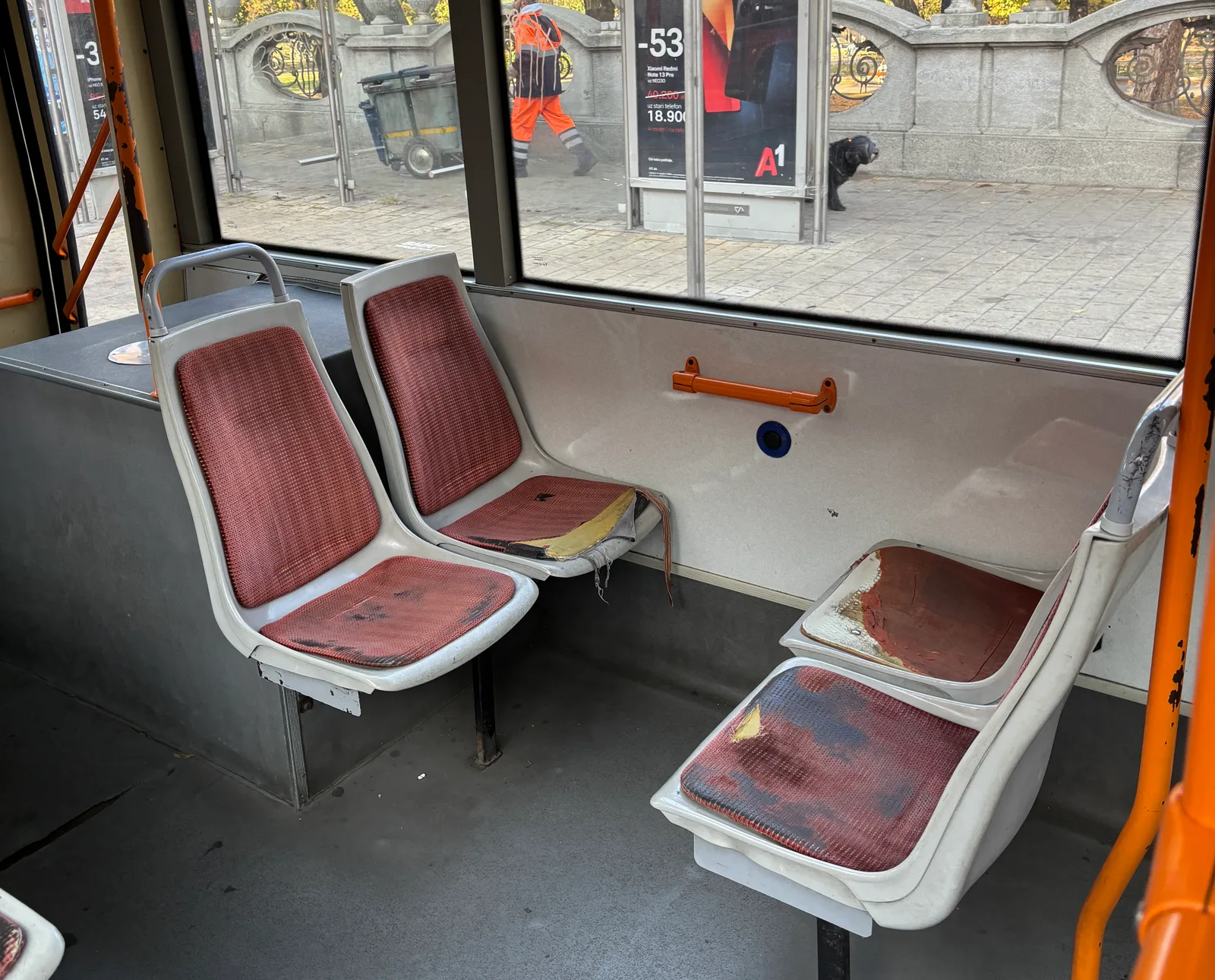
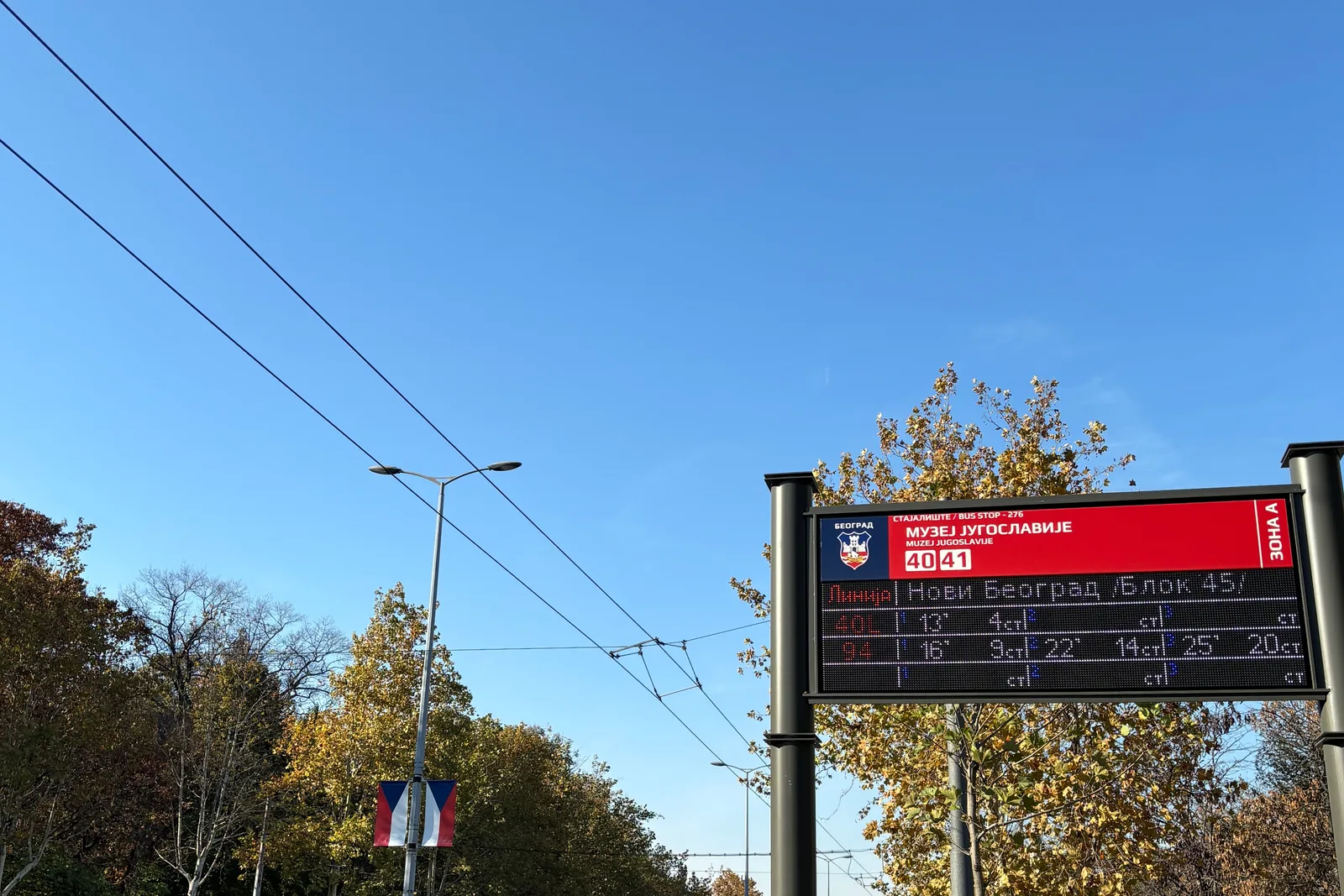
On the subject of public transit: the Balkan countries have a well-earned (?) reputation for unreliable transport — buses running late or canceled altogether is simply a fact of life. In Serbia, most of the buses running within cities are holdovers from the Yugoslav era. Boarding one is like stepping into a time capsule: battered, grimy seats and engines that groan. The government lacks the funds to replace them, so the philosophy is: if it still runs, keep running it.
This creates an interesting phenomenon: every bus has a ticket machine on board, but nobody pays. Passengers simply hop on and hop off. The local attitude is roughly: if you don’t care, neither do I — if the government gives us service this bad, they can forget about collecting our fares.
But I was an outsider, in the end. I left the hostel early with full confidence, heading to the bus station — and then the bus was late, traffic was terrible, and by the time I reached the station, there were five minutes until departure.
Not my first time scrambling for a bus. I opened my FlixBus e-ticket with practiced ease and charged toward the platform — only to be stopped by a staff member:
“Do you have a platform ticket?” (Showing e-ticket) “An e-ticket alone won’t get you on the platform.” (???)
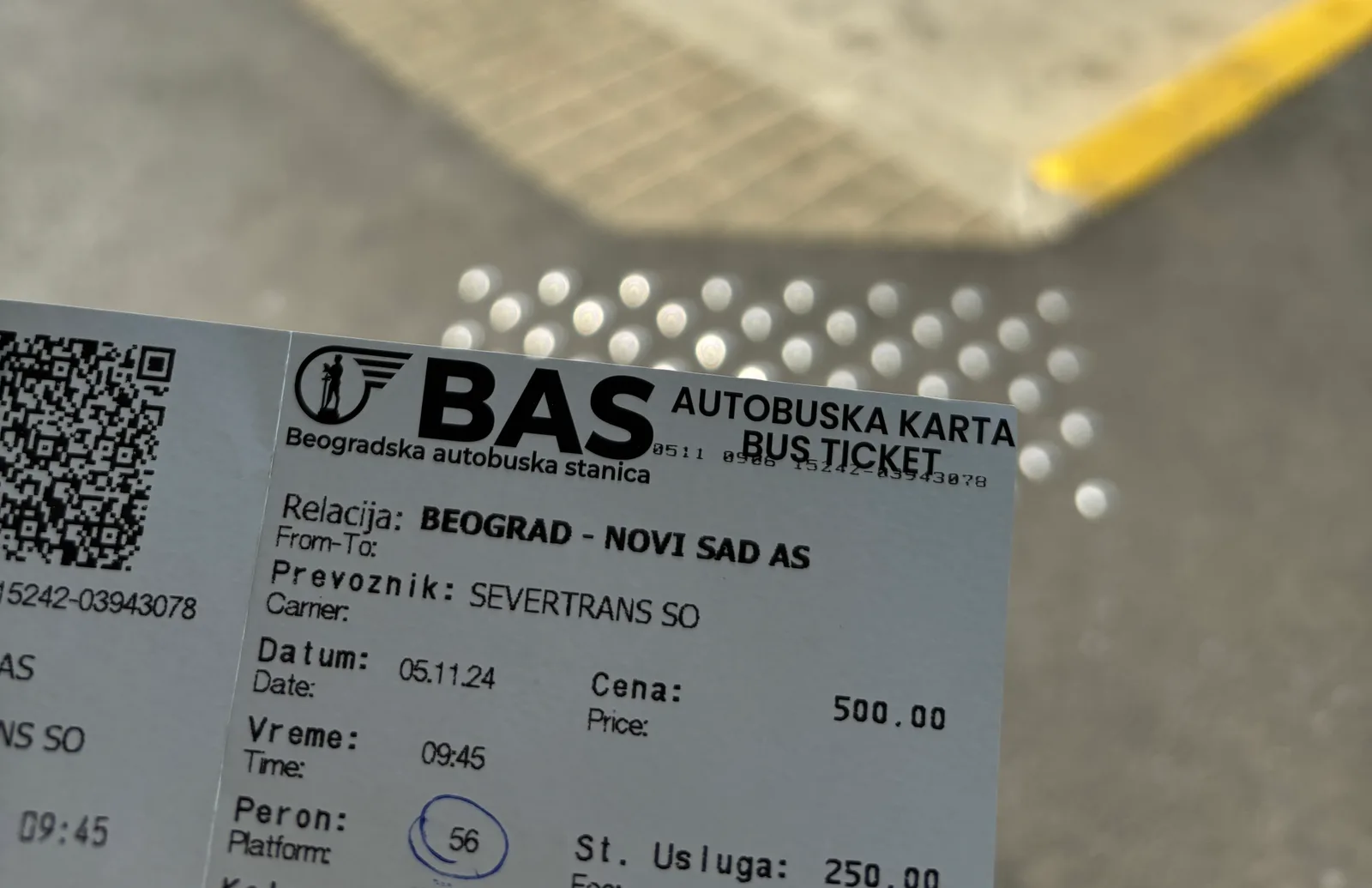
The rules, it turned out, were these: passengers need both a bus ticket and a separate platform ticket. The bus ticket goes to the bus company; the platform ticket goes to the station. Without the platform ticket, you don’t know which bay your bus is at — so even if you make it to the platform area, you can’t find your bus. By the time I’d sorted this out, my bus had already gone.
I swallowed the loss, bought a ticket for the next departure, and this time made sure to arrive twenty minutes early.
Ten minutes, five minutes — the departure time came and went with no bus in sight. Afraid of a repeat disaster, I quickly grabbed a random passerby to confirm — yes, this was the right place to wait. With time to kill, we started talking.
Vladimir said he was from Novi Sad. But he hadn’t actually been in Serbia for the past few years — he’d been working as an engineer in Germany and Ireland, and was back now to deal with some paperwork.
He warned me to be careful in Novi Sad today: there would be a large anti-government protest in the city center that evening, demanding accountability for the station accident.
On the subject of the railway itself: it had been primarily funded by China. Serbia had joined the Belt and Road Initiative years earlier, leveraging its geographical position at the heart of the Balkans to try to become a transit hub connecting other countries. New high-speed rail lines linking the major cities had cut commute times by more than half.
The station had been undergoing renovation in recent years, completing just three months before the accident, with China Railway International and China Communications Construction Company as the main contractors. After the collapse, the government issued a statement saying the canopy had not been part of the renovation — but the walls above and below it had been, which appeared to be an attempt to dodge responsibility.
Serbia’s government had been in power for many years; corruption scandals across every branch were an open secret, and public resentment had been building for a long time. The construction failure seemed to confirm the government’s incompetence once more. Grief turned into rage; opposition parties and protesters organized marches in cities across the country, demanding reform and the government’s resignation.
But opposition to the government and opposition to China are different things, Vladimir said. Personally, he was fairly satisfied with this railway line — faster and more punctual than plenty of European rail systems.
Serbia Between Many Worlds
A woman suddenly rushed onto the platform, her expression theatrical, her tone almost accusatory, and announced to everyone waiting: the bus had been in an accident on the highway; there was no way to track what was happening, let alone know when it would arrive.
Vladimir led me to jump onto a bus waiting at another bay and paid for my ticket without hesitation. The original bus wasn’t going to show up, he figured. “You could go to the counter and ask for a refund, but honestly, I’d just let it go.” Another ticket, another loss. The people I’d been meeting here all had a certain philosophical non-attachment — it’s a small thing; just chill.
Returning to the earlier topic, he explained that China had been one of Serbia’s most important allies in recent years. A shared anti-American, anti-NATO political stance had drawn them closer. The recent wave of economic cooperation brought large investment flows; personnel exchanges between the two countries were frequent.
If you want to see the traces of China in Belgrade, a walk down any major street makes it obvious: the prominent Bank of China building beside the bus station, Chinese tour groups passing through, Chinese restaurants on every corner — services catering to Chinese people extending across commerce, tourism, and daily life.
As a Taiwanese, I felt it more acutely. Serbia recognizes the People’s Republic of China as the sole legitimate government, making it the only country in Europe that requires a separate visa stamp — not in the passport itself. At the border crossing, the officer took one look at my passport and double-checked with his colleagues three times over; the long late-night queue waited while I stood there. A Chinese man behind me, aware I was from Taiwan, asked curiously: “Why do you need a visa? I thought everyone here was exempt.”
Russia is another close ally. Beyond shared roots in Eastern Orthodox culture and the deep influence of communism on both countries, Vladimir told me that during his school years, everyone had to read Russian literature — Tolstoy, Gorky, the great writers of the golden age. That cultural closeness meant that people of his generation tended to have fairly warm feelings toward Russia.
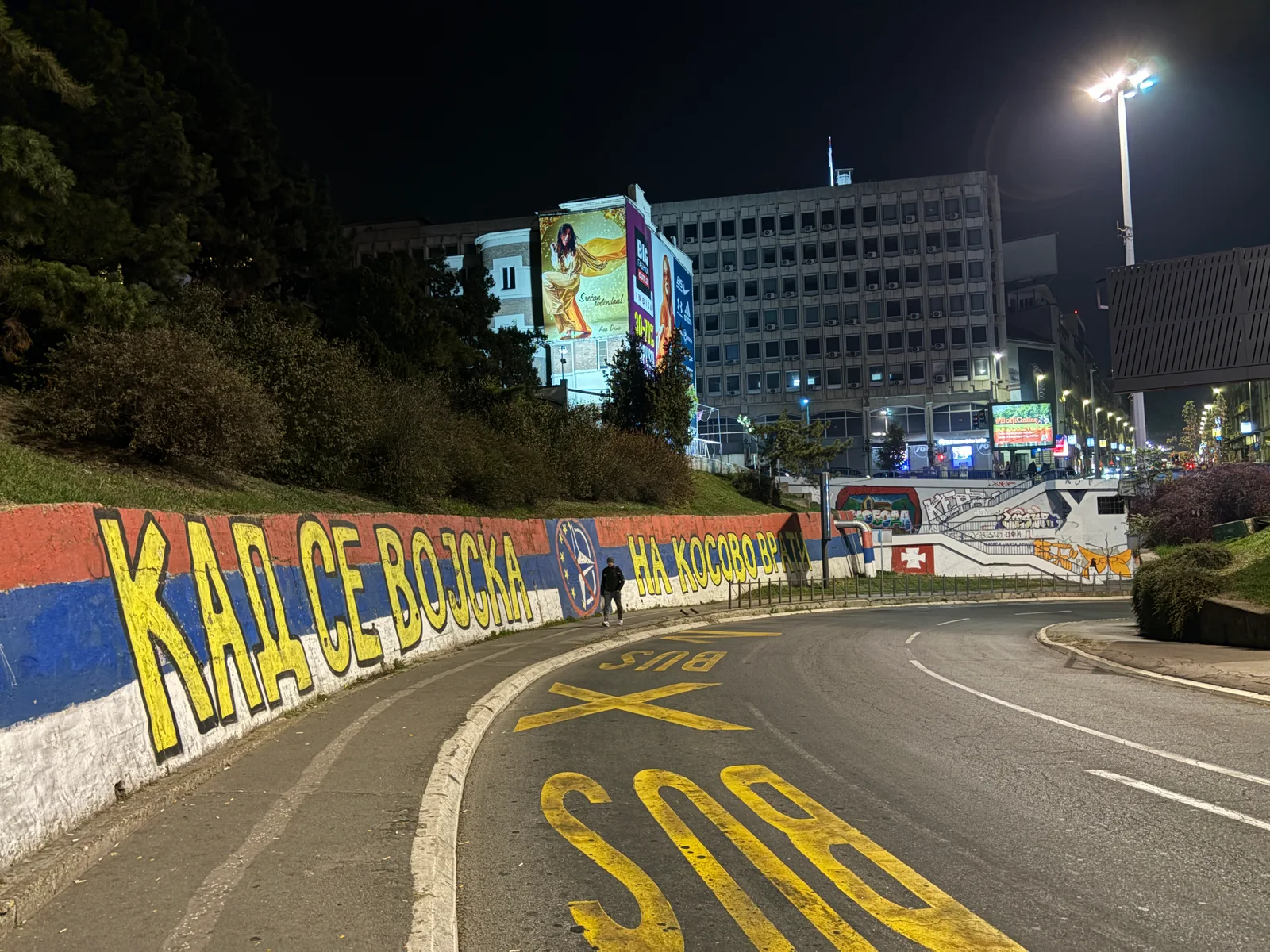
And then there were the wars. Since the twentieth century, Serbia and Russia have fought on the same side in almost every major conflict. Russia (or the Soviet Union) provided military and economic support to Serbia through major wars — from the Yugoslav wars of the last century to the Kosovo War of this century. As a result of its war crimes, Serbia has faced prolonged Western economic sanctions, and NATO bombed Belgrade. To this day, Serbia’s precondition for joining the EU and NATO is the recognition of Kosovo’s independence — something the public cannot accept, and any politician who endorses it might as well be committing political suicide. This anti-American, anti-NATO position aligns perfectly with Russia, making the two countries close partners.
Since the Russia-Ukraine war began and the EU imposed flight sanctions, Serbia has been one of the few countries within European geography still running direct flights to Russia. At Nikola Tesla Airport in Belgrade, there are multiple daily flights to Moscow, St. Petersburg, and other Russian cities. Russia has effectively turned Serbia into its back door into Europe; Serbian Air has expanded its bilateral routes significantly, its business growing against the trend on the proceeds of war.
The shift in air routes mirrors the shift in people. In the past two years, large numbers of Russians have poured into Serbia — for work, for study, for travel. The walking tour I joined was nearly half Russian tourists; at offline meetups I also encountered many long-term Russian residents. It’s not hard to understand the appeal: visas are relatively easy to get, there’s a degree of cultural familiarity, the people are broadly friendly toward Russia, and the shared Cyrillic alphabet helps. The influx has driven property prices in Belgrade sharply upward.
To escape Western economic sanctions, many Russian companies have set up operations here, or global firms have relocated staff from their Russian offices to Serbian ones, continuing to work remotely. Despite Western pressure, Serbia has mostly paid lip service to sanctions and has still not imposed large-scale economic restrictions on Russia.
Political alignment, however, doesn’t mean a complete break with the West. Perhaps partly inheriting Yugoslavia’s tradition of non-alignment — the refusal to take sides between the US and the USSR — the government still maintains channels with the Western world and tries to extract maximum benefit from every direction. Serbian German is still the most popular second foreign language choice; Germany, Austria, and Switzerland remain the top destinations for Serbian emigrants.
Vladimir himself might be a typical example. He works within the EU, yet is skeptical of European values around environmentalism, equality, and individual rights — he thinks efficiency should come first. At the same time, he has a genuine appreciation for Russian culture. He told me he had been in Moscow two weeks before; not a trace of the war was visible. Parties were still running every night; people were still dancing; a few restaurants had changed their signs, but the economy appeared completely unaffected.
I asked if he’d ever thought about working in Russia. Never crossed my mind, he said — most people still feel Germany is the better option.
Mourning and Rage
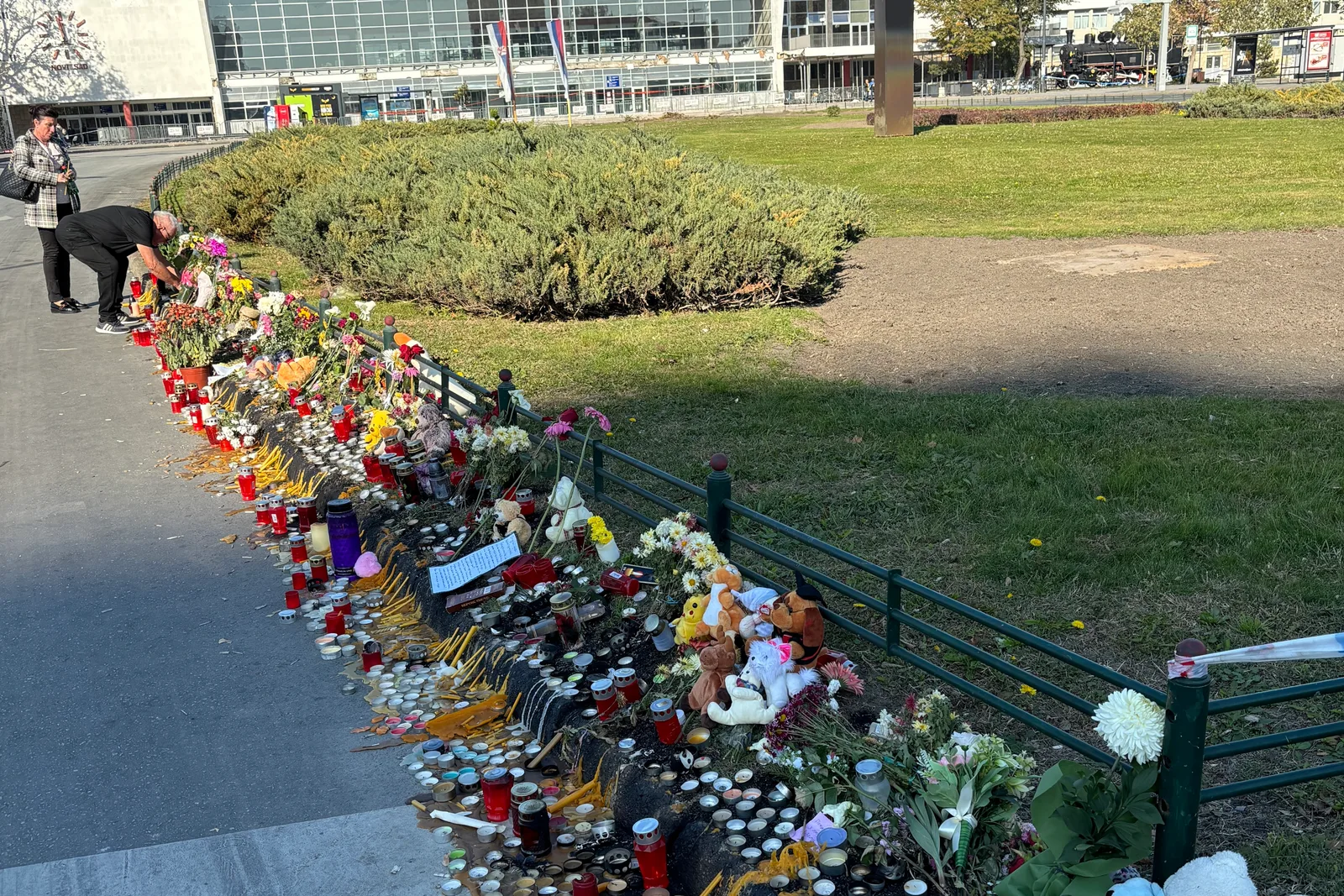
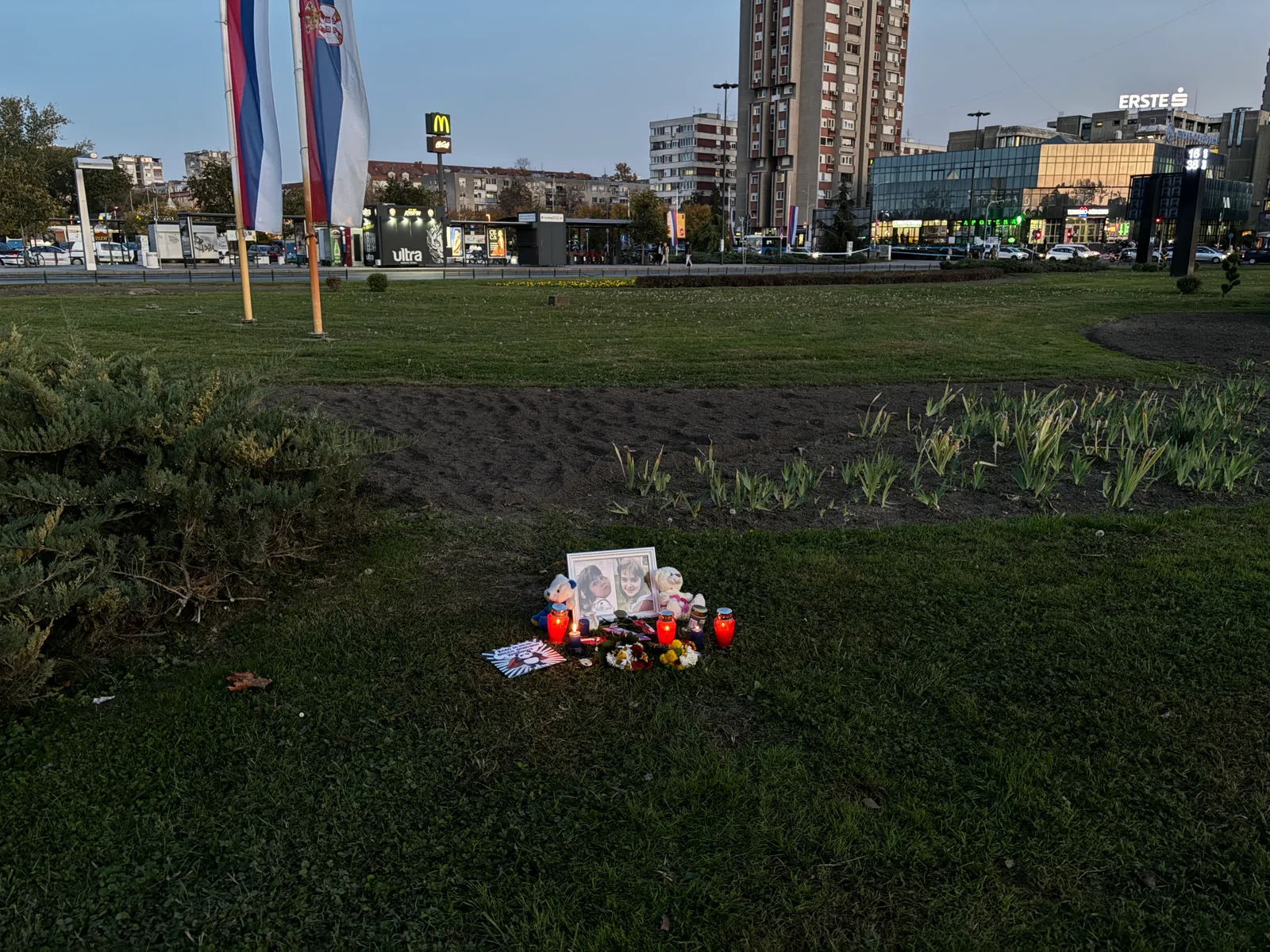
Stepping off the bus, I immediately saw the memorial flowers and candles laid out on the grass outside the station — people had come spontaneously to pay their respects. At the far end, two small stuffed bears: placed for the two young girls taken by the accident.
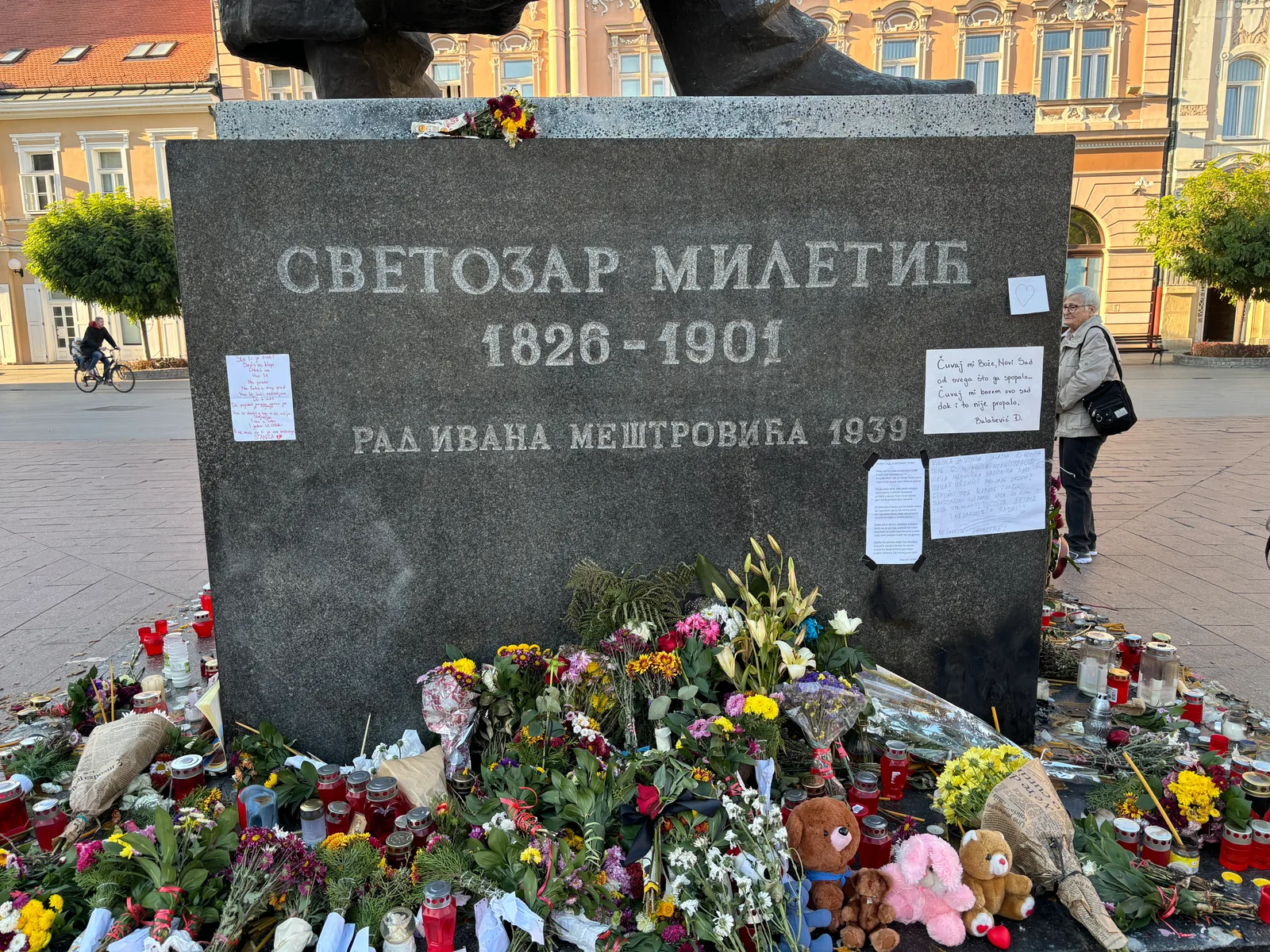
In the square in front of City Hall stood a statue, its base covered with photographs of the fourteen victims. Nearby, slogans and poems had been posted; below them, yellow and red flowers, burning candles, and trails of wax dripping across the ground. Every passerby stopped for a moment. An elderly woman added a new candle. Someone pulled out a handkerchief and wept. Children, as if sensing the gravity of it all, went quiet.
The statue’s base also carried a poster for that evening’s protest — gathering at the train station at six o’clock, marching through much of the town to converge in front of City Hall. By some strange coincidence, the statue itself is of Svetozar Miletić — the man who led Serbs in resistance against Austro-Hungarian rule in the nineteenth century.
The daylight stretched longer than I expected — in sync with Central European time here, sunset came around four in the afternoon. As the sky darkened, the atmosphere of the city seemed to quietly tighten.
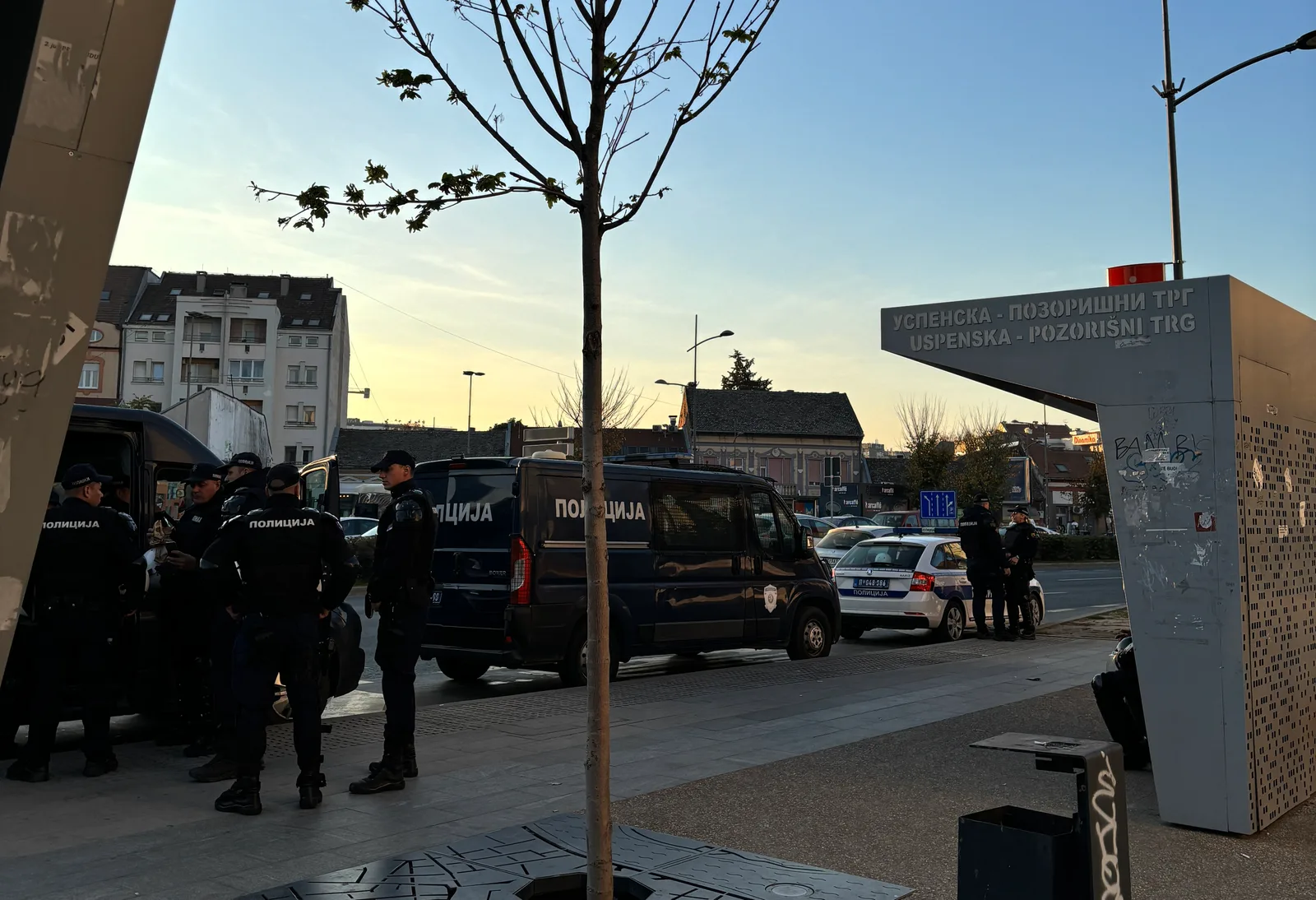
Fully armed and grave-faced police were posted outside City Hall; opaque vans idled nearby, their contents unknown. People said tonight’s march would be enormous — no one knew exactly what would happen, but if it came to conflict, they weren’t optimistic, because the police had a history of using force.
As night fell, crowds began gathering outside the train station. Camera operators from every outlet set up their equipment, ready to capture whatever unfolded. The memorial candles became gathering points; the sound of voices grew; an undercurrent of agitation ran just below the surface.
I had a gathering to get to in Belgrade that evening, and reluctantly gave up my chance to watch. I went to board my original bus back — arrived twenty minutes early, remembered the platform ticket this time, swiped through, and sat down to wait.
Ten minutes, five minutes — impossibly, there was again no bus. Before long, a staff member came to tell us: protest crowds had blocked the roads outside the station, and buses simply couldn’t get in or out. We were stranded on the platform. Through the station walls, I could faintly hear the protesters shouting, the metallic beat of things being struck, flashes of light across the sky.
An hour later, a staff member announced a bus had finally been arranged. It would go to a highway stop, and from there a coach would take us back to Belgrade. Convinced it was all over at last, I jumped onto the bus, then onto the coach, and was just settling in to close my eyes when a man in uniform walked from the front toward us:
“Your original bus was canceled. This is a last-minute replacement from another company — we’ll need to collect the fare.”
Souvenir of the day: five bus tickets.