“Just like what my classmate’s internship organization — Happen — is doing.”
A few days earlier, in Urban Sociology, we’d been discussing Jane Jacobs: how top-down, monolithic urban planning policies end up erasing the heterogeneity of cities, destroying existing neighborhood relationships and social support systems. Cities keep building large-scale public facilities and apartment blocks, but the software — the relational infrastructure — gets ignored, and the agency of the people who live there goes overlooked.
Then Dong-sheng looked toward me and said, just like that.
Social housing isn’t the main focus for interns, but there’s a column in the work dashboard for union tasks, and the full-time staff occasionally invite us along for various kinds of support. I went to a market event at a social housing complex in Wuqi.
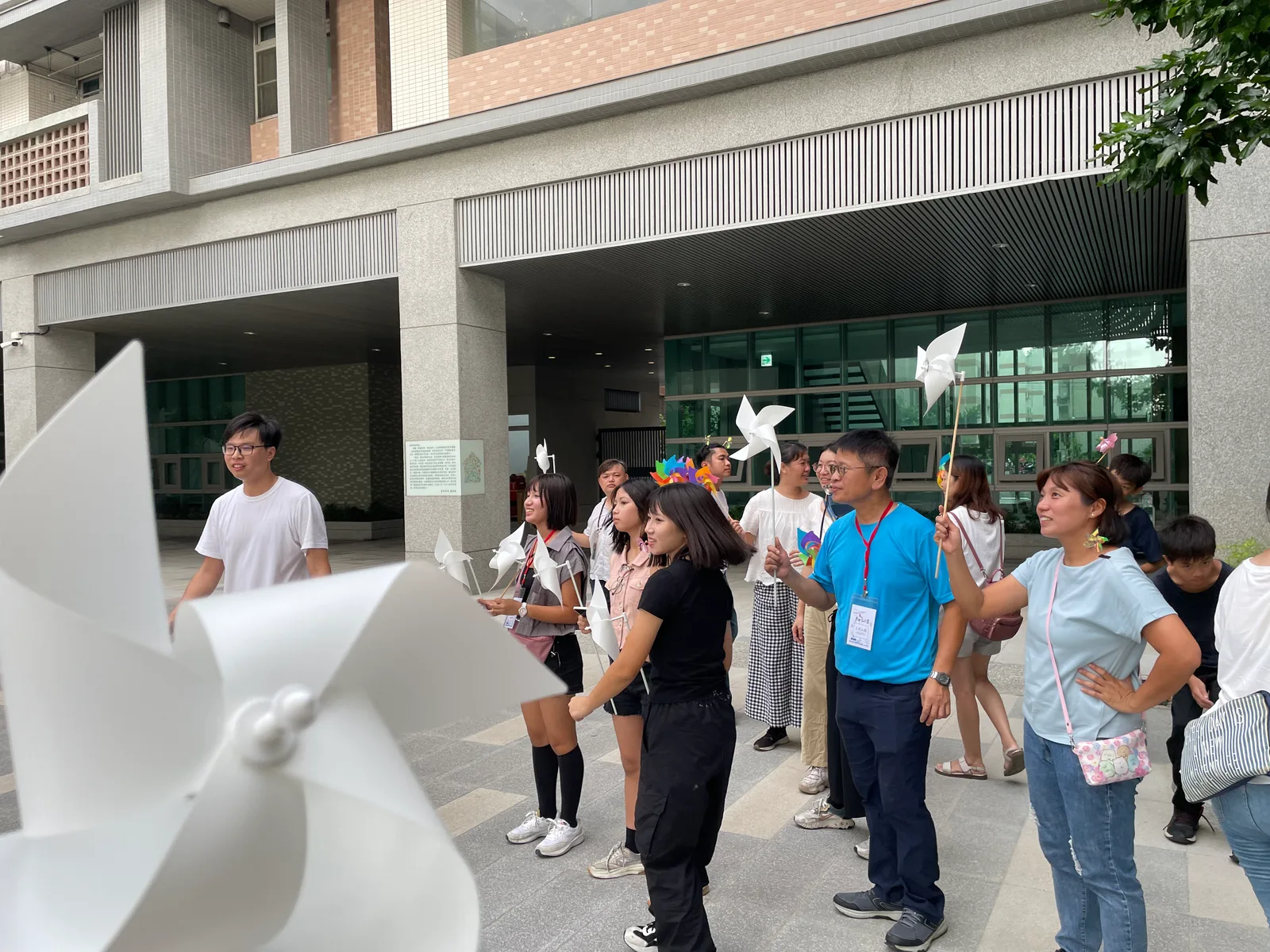
That morning, community volunteers were busy in and out, starting from the setup, guiding attendees step by step through the whole process. The market drew a steady crowd; I helped manage a games booth, giving small prizes to kids who finished the activities. Minding a stall can feel slow — and so I fell into conversation with the father who had set up next to me. He was from Wuqi, though he didn’t live in the social housing complex. He’d grown up here, watched the area develop and change over decades. A few weeks ago, he’d heard the community was organizing a market and decided to come help out. He said it was a wonderful thing to be able to set up a stall with his kids, perform together, and interact with the crowd.
Walking around, taking it all in — I spent the whole day watching people, witnessing the slow gathering of community energy with my own eyes.
Right, software infrastructure really does matter. I thought it while listening to Dong-sheng.
After class, I ran to have a brief chat with Dong-sheng. He shared some of the story behind Haobàn’s founding — community, he told me, forms gradually; it has never been a simple thing. I mentioned this experience, told him I had a deep sense of the effort Haobàn had put in over this time: still a long road ahead, but I could feel that something was beginning to shift.
“It’s not just Haobàn’s responsibility — we need more people to join,” he said. Building a better community has never been solely the obligation of community organizers; it takes everyone laying one brick at a time, building steadily from the ground. Just as he’d moved a group of university students in the classroom, and they had gone back to Taichung to put in the work with Haobàn. Or like Jia-wei and the whole Haobàn team, who looked after us so attentively, inviting us to become part of co-creating the community.
How did I get here? I don’t think it was without reason. There was the patrol walks with elders in Taihe Li (泰和里), the community walking tours, even dancing line dances in front of the temple with the aunties (阿姨). First meetings where we were total strangers, and yet they were willing to share their past with us — and in what they said, you could hear a quiet pride in their community. Or last semester’s Mudan Township (牡丹鄉) in Pingtung, going from zero to meeting the people of the town — the school worker who had once been a woman miner, the enthusiastic principal who had come from elsewhere, the young man who had returned home to run a toast shop, the teacher quietly focused on his tea ceremony. I’ve come to think there’s no predetermined shape a community should take; it’s these people who make a community what it is.
Looking back at the urban life we tend to feel proud of — somewhere in the acceleration, in the relentlessness of getting by — it seems we’ve also lost something.
Lately I’ve been sinking into some thoughts — difficult ones, anxious ones. What’s the next step? I don’t have much time; what do I do?
“It’s always about people.” Walking back to the dormitory, sorting through my thoughts, those words surfaced from somewhere in my mind. All along the way, what I’ve valued and treasured most has been connection — the interactions and exchanges with people.
Maybe the people I have already met, the people around me now, and the people I have yet to meet will be the ones who keep guiding me forward.